Installing Minikube on your local Kubernetes Cluster - Civo Academy
Learn how to install Minikube on your local Kubernetes Cluster and how to explore the Kubernetes dashboard.


The latest News and Information on DevOps, CI/CD, Automation and related technologies.
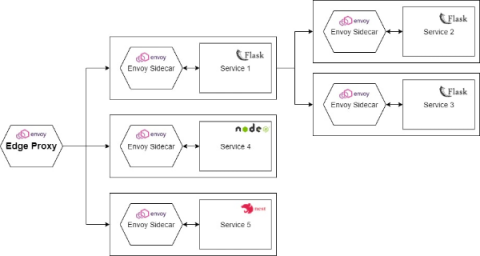
Recently microservices-based applications became very popular and with the rise of microservices, the concept of Service Mesh also became a very hot topic. Unfortunately, there are only a few articles about this concept and most of them are hard to digest.
In the era of Microservices, Cloud Computing and Serverless architecture, it’s useful to understand Kubernetes and learn how to use it. However, the official Kubernetes documentation can be hard to decipher, especially for newcomers. In this blog series, I will present a simplified view of Kubernetes and give examples of how to use it for deploying microservices using different cloud providers, including Azure, Amazon, Google Cloud and even IBM.
Redis is an in-memory key-value data store that offers fast performance, flexible data structures, and multi-model databases, allowing it to handle a variety of use cases. Redis Enterprise enhances open source Redis with features designed to run distributed applications at scale, such as multi-tenancy, tiered data storage, active-active cluster replication, and support for up to five 9s of availability.
As digital transformation accelerates and more organizations use software solutions to facilitate work operations, security threats have become more commonplace. Cybercriminals tirelessly develop ways to exploit software application vulnerabilities to target organizational networks. A notable example is the 2017 Equifax data breach, which exposed the personal details of 145 million Americans.