Operations | Monitoring | ITSM | DevOps | Cloud

The latest News and Information on DevOps, CI/CD, Automation and related technologies.

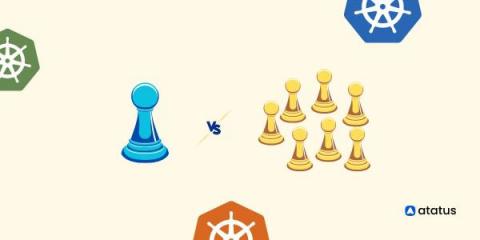
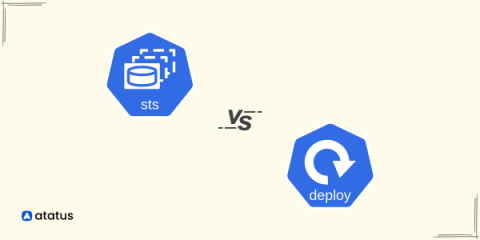
Statefulset vs. Deployment in Kubernetes

As Kubernetes continues its ascent as a leading container orchestration platform, it's common for users to encounter a perplexing choice between two prominent workload controllers: StatefulSets and Deployments. Despite both controllers being instrumental in managing high-availability workloads, they diverge significantly in terms of features and use cases. Grasping these distinctions is pivotal for fine-tuning the performance and scalability of your Kubernetes infrastructure.
Everything You Need to Know About Kubernetes

Welcome to the world of Kubernetes - a powerful container orchestration platform. Before we dive deep into the concepts of Kubernetes, let's grasp the concept of containers - a lightweight, and isolated units that package applications along with their dependencies, ensuring seamless deployment and portability. In this blog, you will witness Kubernetes incredible abilities. It can handle the ups and downs of your applications, ensuring they scale seamlessly, even when facing tough challenges.

Exploring Kubernetes Nodes: Essential Components of Container Orchestration

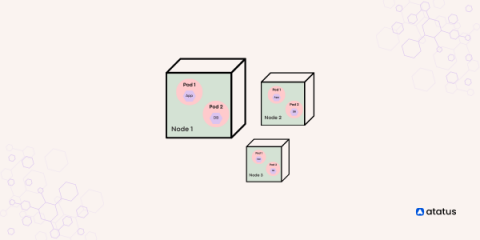
Kubernetes serves as a robust tool for managing and orchestrating applications across multiple computers. These computers are referred to as 'nodes.' Picture nodes as fundamental units in the ecosystem of your applications. Every node possesses its own computing resources, encompassing memory, processing capabilities, and storage capacity. Your apps are hosted and run by nodes. They give your apps the room and resources they need to work.

5 Best Environment as a Service (EaaS) Platforms in 2023

A paradigm-shifting concept has emerged in the dynamic and ever-evolving world of modern software development — Environment as a Service (EaaS). This innovative approach has swiftly become a cornerstone of streamlined development processes, offering developers the means to effortlessly provision, manage, and collaborate within diverse software environments.

Ubuntu Desktop: charting a course for the future

It has been a little while since we shared our vision for Ubuntu Desktop, and explained how our current roadmap fits into our long term strategic thinking. Recently, we embarked on an internal exercise to consolidate and bring structure to our values and goals for how we plan to evolve the desktop experience over the next few years. This post is designed to share the output of those discussions and give insight into the direction we’re going.

Feature flags for stress-free continuous deployment

Feature flags (also known as feature toggles or switches) are conditional statements in code that determine whether a feature or functionality is visible and accessible to users of an application or service. They offer programmers a powerful tool for managing feature releases. Their capabilities are indispensable in software development, where agility and continuous, automated delivery are paramount.

CloudZero Vs. Homegrown Cloud Cost Tooling

From 2022 to 2023, worldwide cloud spending is expected to increase to $597.3 billion, up from $491 billion in 2022. Year over year, that’s a 21.64% increase. Compare that to the 15.42% increase (at the time of writing) in the Nasdaq-100 Technology Sector Index, and you see a simple, inconvenient truth: Cloud spend is outpacing business growth by a substantial margin. It’s no wonder that cloud efficiency sits at the top of many companies’ priority lists.

Choosing the Right Kubernetes Cluster Setup: A Comprehensive Guide

Kubernetes has revolutionized how modern applications are deployed, managed, and scaled. As the container orchestration platform of choice, Kubernetes provides a dynamic and highly efficient environment for running containerized applications. At the heart of this ecosystem lies the intricate relationship between Kubernetes and the applications residing within its clusters. Applications within Kubernetes clusters are arranged through Pods, which are managed and scaled by various controllers.