Operations | Monitoring | ITSM | DevOps | Cloud

The latest News and Information on APIs, Mobile, AI, Machine Learning, IoT, Open Source and more!

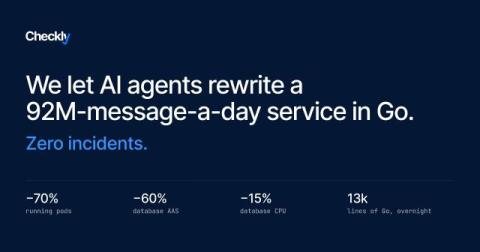
We Let AI Agents Rewrite a 92M-Message-a-Day Service in Go. Zero Incidents.

Our Results Daemon processes about 92 million messages a day. We recently rewrote it from Node.js to Go, and we let Claude Code write it. We wanted to know whether we could trust an agentic rewrite for a critical, high-throughput production service rather than a prototype. It shipped with zero incidents, a 70% reduction in running pods, and a lighter database load.


Why More Technology Is Becoming a Service Instead of a Product

A growing number of technology purchases no longer end at checkout. A phone gains new AI features months after launch, a vehicle receives software updates from the cloud, and a security camera may lose important functions if its online service disappears. The physical product still matters, but increasingly it is only the visible edge of a much larger system.

The End of Browsing: How AI Is Rewriting Digital Discovery

Sometime in 2025, a quiet threshold was crossed: the majority of Google searches in the United States began ending without a single click. Data from SparkToro and Similarweb puts roughly 58.5% of US searches as resolving on the results page itself, and for news queries the zero-click rate climbed from 56% to 69% in a single year. The search box still works the way it always has. What changed is that we've stopped leaving it.

How Digital Tools Are Changing the Way Facts Are Verified

A convincing screenshot, video clip or statistic can now travel across the internet before anyone has established where it came from. The response is changing too. Verification is becoming less about finding a page that agrees with a claim and more about reconstructing its origin, checking its digital traces and comparing several independent signals before deciding how much confidence it deserves.

What Every Business Should Know About Modern Marketing

Picture a business that switches off its ad budget on a Friday. By the following week the leads have dried up, the traffic has flatlined, and the pipeline is empty as if the company had never marketed at all. Now picture a competitor that pauses the same spend and barely notices, because the phone keeps ringing from work done months ago.

From Attention to Action: How Digital Systems Shape Demand

Between the moment someone types a query and the moment they act on the result, a sequence of independent systems runs: query rewriting, intent classification, retrieval, an auction, a click-through prediction, a page render measured in hundreds of milliseconds, and a routing decision about where the resulting tap goes. None of those systems is designed to persuade. They are designed to estimate, price, and allocate.

Navigating Rising Ad Costs: An Honest Review of Google Ad Guy's Hybrid Search Model

Running digital ad campaigns in Australia has become increasingly tough for business owners. Google Search remains the most effective place to find high-intent customers. When someone needs an urgent electrician, a commercial lawyer, or a local service provider, Google is still their first port of call. However, rising cost-per-click (CPC) rates, automated algorithm updates, and widespread agency burnout have made running profitable ad campaigns trickier than ever.

Data-Driven Decisions Accelerate IT Results

Modern IT teams, having moved beyond the traditional reliance on hunches and personal experience that once shaped their day-to-day choices, no longer operate on intuition, since every meaningful decision now rests upon measurable, verifiable evidence gathered from their systems and workflows. Every deployment, capacity change, and incident response now depends on measurable evidence, not guesswork. Companies that base their operations on concrete numbers ship faster, recover quicker, and allocate budgets with far greater accuracy.

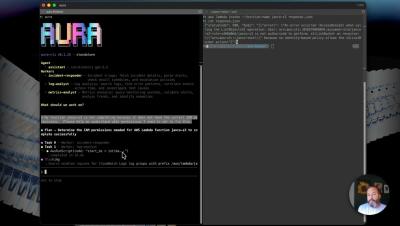
S3 Access Denied: AI SRE Agent AURA Finds the Missing Permission

The bucket is right there and the function still cannot read it. AURA reads the failure, names the one missing action, and returns the policy to add. A permissions failure gives you the symptom and not the action name. The usual path is reading the error, guessing which actions the execution role is short, and widening the policy until the call goes through. Greg hands AURA a Lambda function that fails when it tries to reach an S3 bucket. AURA identifies the missing ListBucket permission on that particular bucket and returns the minimum policy needed to allow it.