Operations | Monitoring | ITSM | DevOps | Cloud

The latest News and Information on APIs, Mobile, AI, Machine Learning, IoT, Open Source and more!

How to Transform Your WordPress Site Into a Learning Hub

A WordPress site can do far more than publish articles or display service pages. With careful planning, it can host structured lessons, enroll learners, track completion, issue certificates, and support paid access. That change matters for schools, coaches, clinics, and training teams that need education beyond their main content. A well-built hub gives visitors a clear path from interest to progress, while administrators gain cleaner data.

AI SRE Agent MCP Authentication by Header: Keep Keys Out of the Config

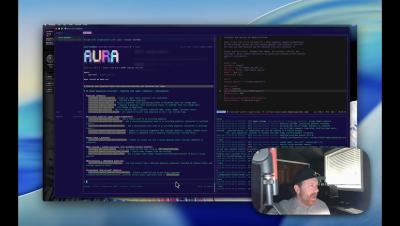
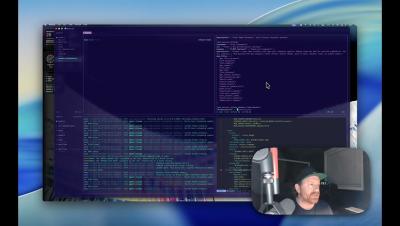
Nobody wants an API key sitting in an agent's config file on a shared server. Mike shows how AURA takes the credential off the request instead. AURA can hold your keys in its config file, but it does not have to. Mike Shearer, one of AURA's creators, walks through the alternative: AURA reads named headers off the incoming request and forwards them to the MCP servers it calls, so the credential never has to sit on disk.

AI SRE Agent Approval Workflow: Identity Forwarding to MCP Servers

Two engineers can hold the same approve button and still not be allowed to make the same change. The key riding with the approval settles it. AURA's human in the loop config gates the create_pipeline tool on the Mezmo MCP server and sends each request to a webhook for review. A mock UI stands in for the approval system here, and Mike walks through the payload schema so you can point it at your own.

AI SRE Agent ChatOps: How AURA Runs in a Slack Incident Channel

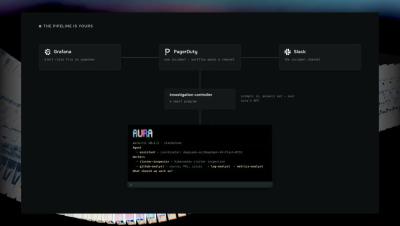
AURA runs as a standalone service and knows nothing about Slack. A separate bridge streams events off its API, which is what makes the chat tool swappable. This is the implementation behind the automated PagerDuty investigation demo. Jeff Vogt walks the whole path an incident takes: a Grafana alert fires PagerDuty, PagerDuty opens a Slack channel and sends a webhook, and a service called AURA Bridge picks it up and calls AURA's API with an investigation prompt.

Canonical joins the Open Secure AI Alliance

Canonical is now part of the Open Secure AI Alliance, announced by NVIDIA with partners across cloud computing, cybersecurity, enterprise software, open source foundations, and AI research. The alliance aims to develop and share open technologies, techniques, and tools to safeguard software and agents in the age of AI.

AI harnesses for telco autonomous networks

Across the global landscape, telecommunications operators have already deployed machine learning for predictive maintenance, customer care chatbots, and anomaly detection. However, as the industry transitions toward Autonomous Networks Level 4 (AN L4), where networks can make intent-driven, predictive decisions and perform closed-loop management with minimal human intervention, a fundamental architectural challenge has emerged.

Loop Engineering Guardrails for iGaming with Claude Code and CX CLI

Tuning guardrails can take time. To accelerate this, we combined the power of Claude Code, Coralogix Telemetry and the CX CLI, to build a loop that iterates on guardrails. To test our loop, we built a fictional chat interface for an iGaming operator, that took bets, gave odds on markets and more, but with a catch: this agent was not permitted to make predictions about where the market was going. With our goal in place, we got to work designing our loop.