
Operations | Monitoring | ITSM | DevOps | Cloud

The latest News and Information on APIs, Mobile, AI, Machine Learning, IoT, Open Source and more!

Modal scales the next generation of AI with unified observability from Datadog

Modal is an AI infrastructure company rebuilding the cloud for AI, giving developers easy access to the compute needed to build and scale AI applications without managing the underlying complexity. Operating across more than 20 cloud providers and launching approximately 26 million containers daily, Modal relies on Datadog to unify observability across its infrastructure, applications, networking, and CI—helping its engineers detect 99% of incidents within five minutes, resolve 96% of issues before customer impact, and confidently scale one of the world’s most complex AI platforms.
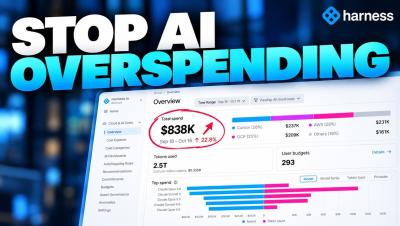

Harness Cost Management Agent | How to Set and Enforce AI Spending Budgets

Control AI spending across your organization with Harness Cost Management Agent's AI User Budgets. In this demo, see how Harness helps teams set, monitor, and enforce AI spending limits across tools like Claude, Cursor, and Amazon Bedrock, all from one centralized control plane. What you'll learn: Set weekly AI spending budgets for users and teams Track AI consumption across multiple tools and models.

Enterprise Vibe Mode: Deploy AI-Built Apps to Production | Harness Demo

Vibe coding makes building applications easier than ever. But how do you take an AI-generated app and safely deploy it to production? In this demo, see how Harness brings Vibe Mode to the enterprise, allowing anyone to deploy applications while automatically applying your organization's security policies, governance, compliance requirements, and deployment configurations. See how Harness enables teams to.

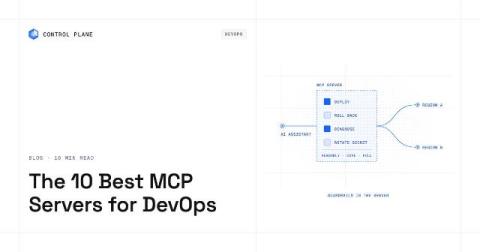
The 10 Best MCP Servers for DevOps and Cloud Infrastructure in 2026

The best MCP servers for DevOps depends on what you want an AI assistant to do: read code and pipelines, plan infrastructure as code, call one cloud’s APIs, observe production, or deploy and operate workloads. The safest setups combine scoped permissions, a read-only mode for investigation, confirmation before destructive actions, and an audit trail of every change.

Observability Lessons NVIDIA and CoreWeave

The best thing that can happen to an open-source project is to find its way into some of the world’s largest technology companies. In September 2026, this happened twice in one week: VictoriaMetrics is now officially bundled in the self-managed edition of NVIDIA’s Cloud Functions, and I learned that CoreWeave is using VictoriaMetrics as the metrics backend for all of its infrastructure customers. Both companies adopted VictoriaMetrics independently.

YouTube Let AI Prototypes Read Production. The Token Did the Work.

TL;DR: Google Cloud’s post of 22nd July 2026 on why AI apps fail in production describes how a YouTube team gets AI prototypes in front of user research in weeks instead of quarters: a prototyping stack that hands each prototype read-only access to live production data through a proxy, keeps its code out of the production binary, and throws the prototype away once the idea is proven.

6 improvements that make Grafana Assistant better at helping your workflows

When you ask Grafana Assistant to build a dashboard or investigate an alert, you're doing so because there's work to be done. To do that work effectively, you need the right data, changes you can inspect, and conclusions supported by evidence. You also want Assistant to avoid mistakes and act quickly. Over the past six months, our team has worked hard to improve what makes those outcomes possible.

How SGP.32 unlocks next-generation IoT deployments

Every time a smart utility meter transmits consumption data, a connected vehicle updates its telemetry, or a fleet of logistics trackers crosses international borders, seamless and uninterrupted connectivity is vital. Yet for years, managing Internet of Things (IoT) devices at scale has been constrained by physical SIM logistics, operator lock-in and remote SIM provisioning standards that were simply never built for autonomous, resource-constrained hardware.

AI wrote the bug. You need production data to reproduce it

A pull request lands with a function an AI assistant generated. It reads cleanly, passes the existing tests, and gets merged. Three weeks later it breaks, but only for accounts with a specific billing history. Nobody wrote a test for that condition because nobody was thinking about it when the code went in. Now someone has to debug logic they didn't reason through, against a failure they can't picture without the exact data that triggered it. Debugging someone else's code has always worked this way.