Operations | Monitoring | ITSM | DevOps | Cloud

Keynote: Cloud Networking for AI Architectures | Roy Chua | Megaport Connect 2026

AI is changing how networks are designed and operated. This session explores how GPU infrastructure, AI workloads, and automation are reshaping enterprise and cloud networking, and what these shifts mean for network architecture and the future role of network engineers. Recorded at Megaport Connect 2026. Chicago | Thursday 22 October ABOUT THE SPEAKER | Roy Chua, Founder and Principal, AvidThink.
Ship SecOps changes like software: Modernizing the SOC without breaking what works

Cribl gives security teams control over their data: what they collect, where to send it and how much to keep. The rest of the SecOps stack hasn’t kept pace. Detections, parsers and configurations spread across SIEMs, pipelines and data lakes still change by hand, so every cost cut, migration or new source turns into weeks of manual validation, and plenty of planned changes never happen at all. SecOps as Code closes that gap: every change ships like software, with testing, version control and rollback across the entire infrastructure.

Application Metric or Log? Which should you use?

Sentry offers both "Application Metrics" and "Logs", but both can seem pretty similar. Both logs and metrics are just a collection of attributes attached to a name in your code. Both can be counted, visualized, or alerted on. Both are not sampled by default. So how do you know which to choose? In this video, we'll briefly go over a few examples of when to use logs and when to use metrics. TLDR; Logs are designed for debugging and may be temporary or likely to change when problems arise. Metrics on the other hand are stable, purposely placed events used to track user behaviors.

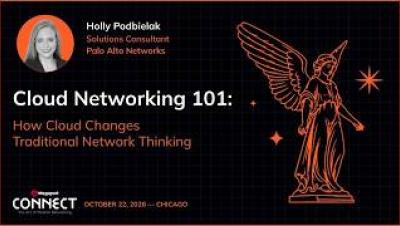
Cloud Networking 101 | Holly Podbielak | Megaport Connect 2026

Cloud has transformed networking. This session explores the fundamentals of cloud networking, including software-defined infrastructure, automation, APIs, infrastructure as code, and cloud connectivity, providing a practical foundation for modern network engineers. Recorded at Megaport Connect 2026. Chicago | Thursday 22 October ABOUT THE SPEAKER | Holly Podbielak, Solutions Consultant, Palo Alto Networks.

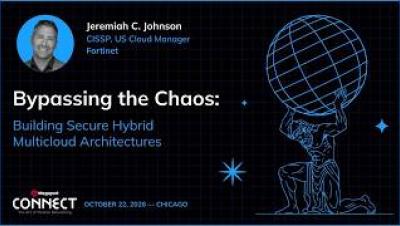
Building Secure Hybrid Multicloud Architectures | Jeremiah Johnson | Megaport Connect 2026

As infrastructure expands across clouds, data centers, and the edge, complexity grows. This session explores practical strategies for designing secure, scalable multicloud architectures that balance performance, governance, connectivity, and operational simplicity. Recorded at Megaport Connect 2026. Chicago | Thursday 22 October ABOUT THE SPEAKER | Jeremiah Johnson, US Cloud Engineering Manager, Fortinet.

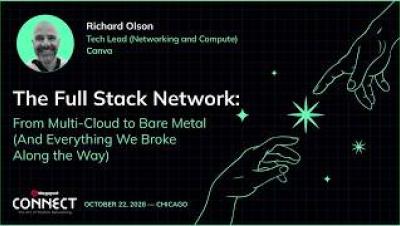
The Full Stack Network (And Everything We Broke Along the Way) | Richard Olson | Megaport Connect

What does it take to build a global hybrid multicloud network? Richard Olson, Tech Lead at Canva, shares the architectural decisions, tradeoffs, and lessons learned scaling infrastructure across clouds, regions, and bare metal at global scale. Recorded at Megaport Connect 2026. Chicago | Thursday 22 October ABOUT THE SPEAKER | Richard Olson, Tech Lead (Networking and Compute), Canva.

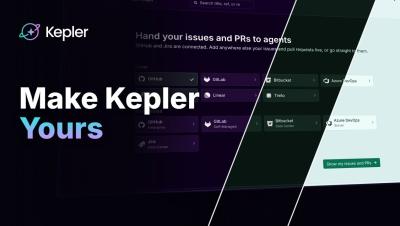
Make Kepler Yours: Create a Theme and Share It in the Gallery

In Kepler ADE by GitKraken, you can make your own theme. Describe the look you want in plain words, and an agent builds it for you. How it works: Open Settings, go to Appearance, and click Create a theme Type the look you want. In this video I asked for gold and maroon The agent drafts the theme and checks every color for contrast before it saves. Then pick your new theme under Your themes Keep your theme for yourself, or share it with a pull request to gitkraken/kepler-themes so it can join the public gallery.

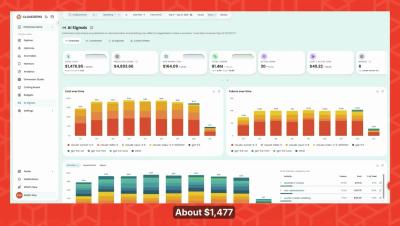
AI Signals Demo: See Exactly What Your AI Spend Is Buying | CloudZero

See who’s spending on AI, on which models, for what work, and what you got for it. Most companies can tell you what they spent on AI last month. Very few can tell you what it bought. In this demo, we show how AI Signals captures AI usage as it happens and ties every dollar to the person, team, and work behind it, across every model and provider.

The Deconstructed Database at Datadog

As Datadog scaled to handle over a hundred trillion daily events, our engineering teams built their own custom query engines to keep things fast. While this helped teams move quickly, it also created silos that made it tough to analyze data across different products. To keep growing and support AI, we had to find a way to bring these engines together using open standards without slowing anyone down or risking reliability.