Operations | Monitoring | ITSM | DevOps | Cloud

The latest News and Information on DevOps, CI/CD, Automation and related technologies.

Cloud Cost Optimization Framework: Build Your FinOps Practice (2026)

Quick answer: A cloud cost optimization framework is a structured, repeatable system for managing cloud spend across people, processes, and tools. It defines how teams gain cost visibility, allocate spend to the right owners, optimize resources and rates, and measure whether spend is generating business value. The FinOps Foundation organizes this around three phases: Inform, Optimize, and Operate — and the Crawl, Walk, Run maturity model maps directly to how organizations progress through them.
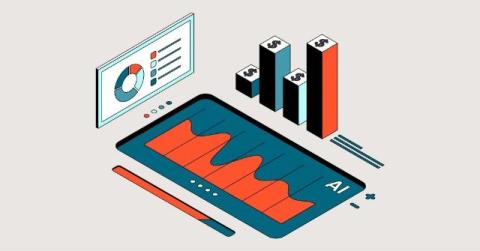

How Will We Hold AI Accountable For Risky Investments?

The word “Trillion” never fails to set the tech world on fire. Foundation Capital’s Jaya Gupta and Ashu Garg are two of the most recent firestarters. Late in December, they co-wrote “AI’s trillion-dollar opportunity: Context graphs,” outlining how AI will transition from organizational knowledge to organizational comprehension.

Why Cloud and DevOps Practices Matter to Prop Trading Firms

The financial industry has always been driven by speed, precision, and the ability to act on information faster than anyone else. In recent years, prop trading firms have found themselves at a crossroads where traditional infrastructure simply cannot keep up with the demands of modern markets. Cloud computing and DevOps practices have emerged as two of the most transformative forces reshaping how trading operations are built, managed, and scaled. Understanding why these technologies matter is not just useful for tech teams, it is essential knowledge for anyone involved in or curious about the future of high-performance trading.

That production incident cost more than downtime

Every developer knows the sudden, cold spike of adrenaline that comes with a P0 alert. The site is down, the Slack channel is overwhelmed with notifications, and the "war room" is officially open. In the immediate aftermath, leadership looks at one metric: downtime. They calculate the lost revenue per minute and the hit to brand reputation. But for the engineering team, the official resolution of the incident is only the beginning.

Debugging the black box: why LLM hallucinations require production-state branching

The most frustrating sentence in modern engineering is no longer "it works on my machine." It is: "It worked in the playground." When an LLM-powered feature, such as a RAG-based search, an autonomous agent, or a dynamic prompt engine, fails in production, it doesn’t throw a standard stack trace. It returns "slop," hallucinations, or silent retrieval failures. Standard debugging workflows fail during triage because LLM hallucinations cannot be reproduced using static mocks or clean seed data.

Performance Testing vs Load Testing: Simple Difference

Learn the clear difference between performance testing and load testing in this quick video. Performance testing checks how well your software works under different conditions like speed, stability, and scalability. Load testing focuses only on how the system handles expected user traffic. If you want to build reliable applications, knowing these two helps you test smarter. Perfect for developers, testers, and QA teams.

Architecture deep dive: What makes a bug reproducible?

The most difficult bugs to solve aren't those with the most complex code, but those with the most complex state. For a bug to be "reproducible," it must be deterministic, meaning the same set of inputs always yields the same failure. In a modern cloud environment, those "inputs" include more than just your code; they include the specific version of your database, the latency of your service mesh, and the exact configuration of your underlying infrastructure.

FinOps Roles And Responsibilities: Building Your Cloud FinOps Team (2026)

Quick answer: FinOps roles and responsibilities typically span four core functions: FinOps analyst (hands-on cost analysis and anomaly detection), FinOps engineer (resource tagging, automation, and rightsizing), FinOps architect (process design and optimization frameworks), and FinOps lead (program ownership, C-suite alignment, and cross-team accountability).