Operations | Monitoring | ITSM | DevOps | Cloud

The latest News and Information on DevOps, CI/CD, Automation and related technologies.

From Traffic Context to Confirmed Fix in 3 Minutes

We’ve been building an AI agent that can take a production bug, find the root cause in captured traffic, write a fix, and validate it before a human reviews it. We call it Agent Factory. Last week we ran it on ourselves, against a real bug in our own production service. The first thing we did was get the workflow wrong.

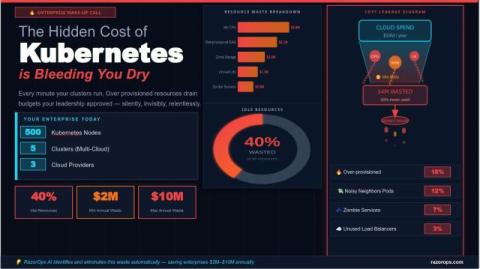
The Hidden Cost of Kubernetes: Why Your Cloud Bill Is 40% Higher Than It Should Be

The average enterprise running Kubernetes wastes between $2 million and $10 million annually — not from overspending, but from under-optimizing. This is the story of costs you can't see on your dashboard but that your CFO feels every quarter.

DORA Metrics in the AI Era: Why Deployment Isn't Faster

DORA metrics in the AI era reveal a paradox: PR volume is climbing, but deployment frequency is staying flat. In this talk, GitKraken's Director of Product Jeff Schinella breaks down why AI-accelerated code generation is creating a review bottleneck that your DORA metrics can't fully explain on their own. Jeff walks through how PR metrics (cycle time, first response time, code churn, and PR size) serve as the leading indicators behind your DORA data. If your deployment frequency is flat while PR counts go up, the bottleneck isn't your devs. It's your review capacity.

The sovereignty without toil guide: why compliance shouldn't require a Kubernetes tax

True data sovereignty isn't about managing your own cloud accounts; it’s about where your data resides and how it is governed. By utilizing a unified configuration file to deploy on sovereign infrastructure like OVHcloud, Upsun provides standardized sovereignty without the complexity of “Bring Your Own Cloud”.

Core Java vs Enterprise Java: Jakarta EE, Spring Boot & Modern Trade-offs [2026 Guide] | Harness Blog

‍ When you're architecting an enterprise Java application, one decision quietly shapes everything downstream: runtime footprint, deployment pipelines, and how your platform team handles incidents at 3 a.m. For two decades, that decision was framed as Java SE vs Java EE. In 2026, that framing has quietly inverted.