Operations | Monitoring | ITSM | DevOps | Cloud

The latest News and Information on DevOps, CI/CD, Automation and related technologies.

Business benefits of artificial intelligence in retail

The retail industry is going through a period of major upheaval. AI is transforming the landscape at a rapid pace. Grand View Research evaluated the market value at USD 5.79 billion in 2021 and this is expected to grow at a 23.9% compound annual growth rate (CAGR) from 2022 to 2030. For retailers, this translates into a need to adapt to an entirely new paradigm of customer expectations.

Using PostgreSQL advisory locks to avoid race conditions

The first moments of incident response can be among the most crucial, which in turn can also make them among the most stressful. There are many ways to ensure incidents are kicked off smoothly, but a recent focus of ours was to ensure they could be kicked off quickly. After all, the faster you're able to start mitigating your incident, the more successful you'll be!

How to Show Reliability Results to Your Organization

Building momentum for a reliability program can be tough. Improving reliability takes time, effort, and resources. But when everything from launching new features to improving security demands those same resources, it can be a struggle to get the buy-in you need to address reliability risks. And it makes sense! If a team spends time patching a known security bug or creating a new feature, they have a clear demonstration of the value created.

Zero trust security for CI/CD pipelines

The zero trust security model is an approach to network security that enforces strict access controls and authentication at every stage of the software development lifecycle. It treats every user, device, and transaction as a security risk and uses the principle of least privilege to restrict access to sensitive resources and minimize the potential attack surface.

Overcoming Complexity: Part II

This is the second in a three-part series on Taming Complexity for Competitive Advantage. Part I of this series discusses the need to develop orchestration strategies to deal with the complexities of integrating cross-domain infrastructure. In part II, we introduce the temporal element of change, including the integration technology journeys brought on by mergers and acquisitions.

Ubuntu Core as an immutable Linux Desktop base

Canonical began the development of Ubuntu Core in 2014, to create a fully-containerised platform for IoT. In Ubuntu Core, we use the same kernel container technology that Docker and LXC are built on, to put every component of the system into a secure sandbox, with well-defined upgrade and rollback. We did this to enable autonomous connected Internet of Things devices to receive updates which they could apply without human intervention, to address security and business needs at the edge.

Kubernetes Architecture Part 1: Reasons to Choose Kubernetes

This Kubernetes Architecture series covers the main components used in Kubernetes and provides an introduction to Kubernetes architecture. After reading these blogs, you’ll have a much deeper understanding of the main reasons for choosing Kubernetes as well as the main components that are involved when you start running applications on Kubernetes. This blog series covers the following topics.

Use incident cycle time to optimize your incident response process

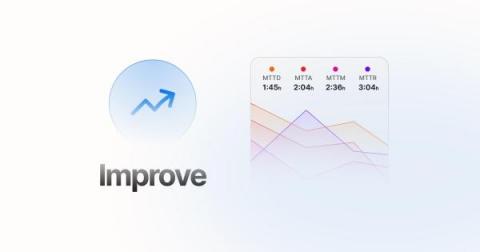
Although the causes and solutions for incidents vary widely, most incidents follow a similar timeline from declaration to resolution. We call the period of time it takes to move from one phase or milestone of an incident to the next cycle time.