Operations | Monitoring | ITSM | DevOps | Cloud

The latest News and Information on Containers, Kubernetes, Docker and related technologies.

Kubernetes Master Class - DevOps Alerting and Visualization with Prometheus and Grafana

In this presentation by Rancher Director of Community Jason van Brackel, you will learn how to setup alerts with Rancher and Prometheus Alert Manager to find problems before there's an outage. You'll also learn to visualize metrics for Kubernetes and for your applications so you can gather new insights to your users' usage patterns and your applications' run-time behaviors.
Monitoring Amazon Classic Elastic Load Balancers with Blue Matador

AWS Elastic Load Balancing is one of the most widely used of Amazon’s cloud services. In many AWS stacks, an Elastic Load Balancer (ELB) will be involved in almost every single request that customers make to your application. Since they are critical to the health of your application, properly monitoring ELBs is a top priority for most teams. In this blog post, we will go over how Blue Matador monitors Classic Elastic Load Balancers automatically and without configuration.

Code Commits: only half the story

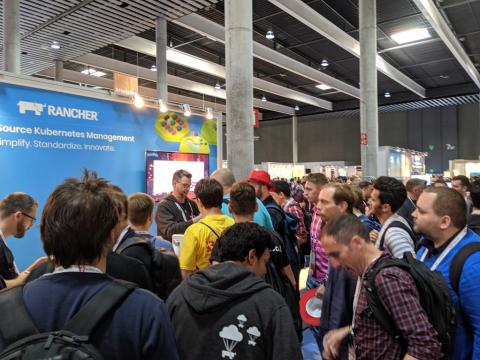
It’s not the first time I’ve been asked by a sales rep the following question: “The customer has looked at Stackalytics and is wondering why Rancher doesn’t have as many code commits as the competition. What do I say?” For those of you unfamiliar with Stackalytics, it provides an activity snapshot, a developer selfie if you will, of commits and lines of code changed in different open source projects.

Extend CI/CD with CR for Continuous App Resilience

The radical shift towards DevOps and the continuous everything movement have changed how organizations develop and deploy software. As the consolidation and standardization of continuous integration and continuous delivery (CI/CD) processes and tools occur in the enterprise, a standardized DevOps model helps organizations deliver faster software functionality at a large scale.

How to enable serverless computing in Kubernetes

In the first two articles in this series about using serverless on an open source platform, I described how to get started with serverless platforms and how to write functions in popular languages and build components using containers on Apache OpenWhisk.Here in the third article, I’ll walk you through enabling serverless in your Kubernetes environment.