Operations | Monitoring | ITSM | DevOps | Cloud

The latest News and Information on Containers, Kubernetes, Docker and related technologies.

17 Best DevOps Tools to Use in 2022 for Infrastructure Automation and Monitoring

You must adopt proper infrastructure automation if you want to enable your teams to achieve faster application delivery while eliminating human errors. Automation of servers, deployment environments, configuration management, and deployments play a vital role in getting a competitive advantage for your product. Monitoring both the infrastructure and application is equally important as well. In this article, we will discuss top tools for infrastructure automation and monitoring.

A Hundred Organizations Trust Us: Why and How they Use Qovery

Since our start in 2019, we are proud to say that a hundred engineering teams from fast-growing organizations trust us to deploy their Production, Staging, and Development Environments on AWS in a few seconds. But why do they use Qovery, and how? That’s what you’re about to discover today!

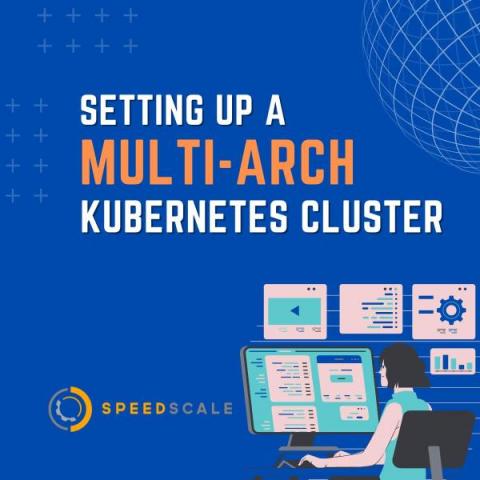
Setting up a Multi-Architecture Kubernetes Cluster

In the last post we covered the industry shift towards ARM machines for both local and production software engineering. Last time we learned how to create Docker images that would work on multiple architectures for dev machines. Now we want to take this portability and leverage it for cost savings in production. You may be able to transition some of your services into multi-architecture builds.

Elasticsearch on Docker Tutorial | Elastic Docker Containers Configuration - Sematext

In this Elasticsearch/Docker tutorial, we will install and run an Elasticsearch cluster on a single Docker host. We will pull an Elasticsearch Docker image (and Kibana), create a Docker network for the cluster, and deploy it on a local host. Containerizing instances of Elasticsearch helps create a scalable and mobile infrastructure, while not sacrificing system performance. Follow along to create and configure a truly open-source Elasticsearch cluster in Docker.

Application Deployment to Civo with a Terraform Template

Join our CTO, Dinesh Majrekar, as he deploys the infrastructure needed to host any application on Civo. This session will use a new terraform template repo to deploy a cluster, install an ingress and let-encrypt helm chart all from terraform. Once these basics are in place, the cluster can be used in GitOps pipelines by other teams to actually deploy their code.

Kubernetes Master Class: GitOps, Rancher and ArgoCD with Codefresh

Join Robert Sirchia and Dan Garfield for this session. Configuration drift is a common problem software developers face. Picture this: two environments are supposed to be similar but are not. Nobody knows exactly what is deployed in that environment/server/cluster, so people are afraid to touch it. It’s declared “off-limits” because nobody can reconstruct it if it breaks down. People do hot-fixes or ad-hoc changes without recording them, and then those developers change teams or companies.

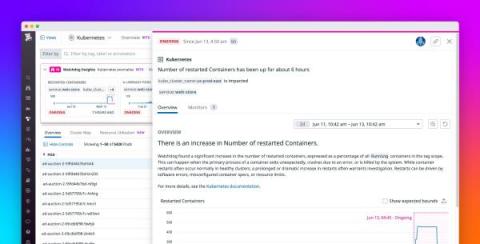
Expedite infrastructure investigations with Kubernetes Anomalies

Modern Kubernetes environments are becoming increasingly complex. In 2021, Datadog analyzed real-world usage data from more than 1.5 billion containers and found that the average number of pods per organization had doubled over the course of two years. Organizations running containers also tend to deploy more monitors than companies that don’t leverage containers, pointing to the increased need for monitoring in these environments.

Need a GPU For Your Next App? Cycle Has Your Back!

After months in development, we are thrilled to announce the launch of Cycle.io's support for NVIDIA GPUs (Beta). Combined with an already powerful platform that enables developers to focus on building, rather than managing, the addition of GPUs will further empower the development of accelerated applications which require a higher level of compute power.

Migration Guide - Jenkins to Razorops

Organizations are becoming more aware of the advantages of upgrading their continuous integration and continuous delivery (CI/CD) pipelines and moving them to the cloud, from lowering infrastructure costs to eliminating security threats. But carrying out a transfer is challenging, especially when a variety of platforms and technologies are involved.