Tips and Tricks for Running Your SaaS Business on AWS: Lessons Learned from JFrog
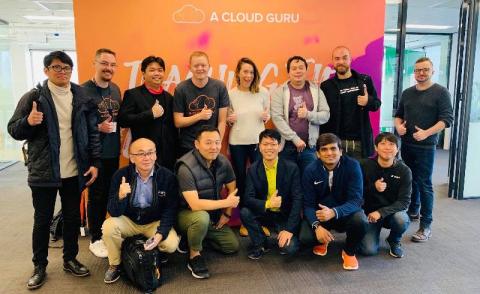
Learn the tips we shared @AWS Community Day Bangalore on how to take your SaaS business to AWS Cloud.


The latest News and Information on Cloud monitoring, security and related technologies.
With the emergence of Amazon Web Services (AWS) in 2002, the Infrastructure as a Service (IaaS) model kickstarted the public cloud revolution that has permanently changed how IT services are deployed and delivered. According to Gartner’s July 2019 Magic Quadrant for Cloud Infrastructure as a Service report, the annual cloud IaaS market is currently worth $41.4 billion and is expected to grow to $81.5 billion by 2022.
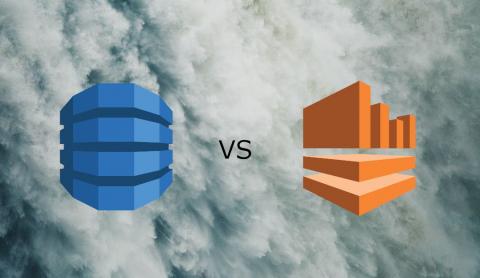
Many clients have asked me, “When do I use DynamoDB streams vs Kinesis?” It’s a great question, since both services are very similar, especially when you process their records with Lambda functions. So let’s break it down and look at the key differences between Kinesis and DynamoDB streams. When it comes to streaming and processing real-time events on AWS, Kinesis is the de facto solution in AWS.
Last week I was battling jet lag and this week, an inbox of unanswered emails. But I’m also marveling at the quality of the AWS community all over the world. I had the privilege of speaking at ServerlessDays Sydney the week before last, and along with the amazing conference talks, I also got to see firsthand just how much of the globe is involved in pushing forward serverless using AWS technology and how excited they were to share what they were learning.
Since it was released in 2015, the Serverless Framework has become the community-favorite way to manage and deploy serverless applications in the cloud. Similar to Terraform and CloudFormation, it lets you express infrastructure as code, making it easy to share and version-control your entire serverless environment.
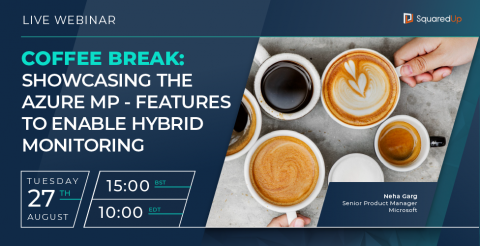
Hybrid monitoring has increasingly become a priority in the SCOM community. A growing number of enterprises are running workloads both on-prem and in the cloud, with some of us creating new workloads in the cloud, and others engaging in a gradual migration to the cloud – a process that often takes place over a number of years. How can we deliver a complete monitoring strategy for our hybrid environments via SCOM?
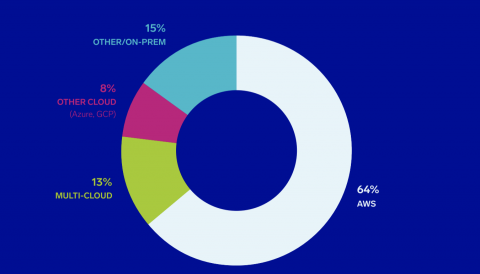
As enterprise cloud migrations accelerate, AWS continues to be a clear and compelling choice for digitally-transforming organizations. And while cloud-based operations are faster, innovative, reliable and cost-effective – they pose new, growing challenges for IT Ops, NOC and DevOps teams. With cloud-based operations, IT organizations now need to minimize outages and disruptions across different architectures and workloads.
Will a technology not heard of four years ago completely change the Cloud Wars landscape? Are we going to see enterprises finally make a shift to multi-cloud? Is AWS Lambda ready for primetime?
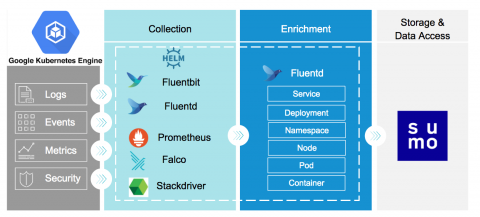
Sumo Logic was one of the first in the industry to release a comprehensive set of applications to monitor and secure the Google Cloud Platform (GCP) stack. We are now expanding our support for Anthos. Anthos is Google Cloud’s open source based platform that lets enterprises run apps anywhere on-prem or in the cloud -- simply, flexibly, securely, and consistently.
Seed is a fully managed CI/CD pipeline for Serverless Framework applications. In one of our previous posts we looked at how to build a CI/CD pipeline for Serverless apps on AWS with CircleCI. Today, we’ll look at how to do the same with Travis CI. The purpose of these posts is to dive deep into real-world CI/CD setups, something which most of the tutorials out there skip. We’ll try to illustrate how to set up something similar to Seed but using Travis CI instead.