Operations | Monitoring | ITSM | DevOps | Cloud

The Place Where Modern Operations & Technology Come Together

The latest News and Information on API Development, Management, Monitoring, and related technologies.
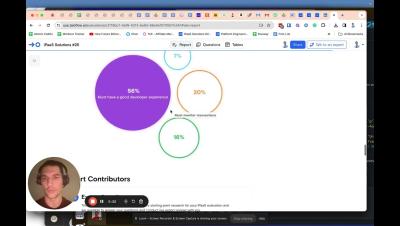

5 ways platform engineers can help developers create winning APIs
Platform engineers can influence API development by following best practices and implementing DevOps design patterns.
Observability with OpenTelemetry and Checkly
Observability isn't just a buzzword; it's a vital compass guiding us through the maze of system health and performance. As we’ve adopted microservice architectures, the ability to know ‘what is currently happening in our system’ has diminished as our operational resilience has increased. We find services scattered among a maze of interconnections and interdependencies. And even the logs that used to guide are now scattered throughout this maze.

How to deal with API rate limits
When I first had the idea for this post, I wanted to provide a collection of actionable ways to handle errors caused by API rate limits in your applications. But as it turns out, it’s not that straightforward (is it ever?). API rate limiting is a minefield, and at the time of writing, there are no published standards in terms of how to build and consume APIs that implement rate limiting.

How to combine Playwright locators to test non-deterministic application flows
Sometimes, applications can behave differently even though your users do the same things. How can you test these non-deterministic flows? Learn in this video how Playwright's "locator.or()" method helps to write tests that can handle different application flows.

A Guide to Visual Regression Testing With Playwright and How to Get Started
I’m pretty sure that you’ve had a situation where you deployed a major UX change on your web app and missed the most obvious issues, like a misaligned button or distorted images. Unintended changes on your site can cause not only a sharp decline in user satisfaction but also a large fall in sales and customer retention. By identifying and resolving these discrepancies before the update went live, you could have prevented these outcomes.
Monitoring an Open Banking Flow With Playwright & Checkly
Open banking offers users a way to have easier access to their own bank account information, like via third-party applications. This is achieved by allowing third-party financial service providers access to the financial data of a bank's customers through the use of APIs, which enable secure communication between the different parties involved.

Visual regression & snapshot testing is now GA
I'm happy to announce that visual regression & snapshot testing for our Playwright powered browser checks is now GA. If you have used these capabilities with your Playwright tests on your local machine or in your CI/CD pipeline, you can now use them 1:1 on Checkly.
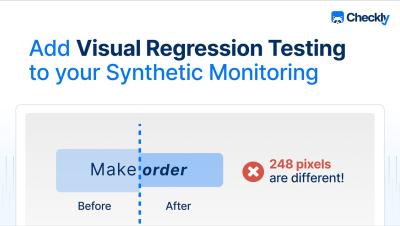
Add Visual Regression Testing to your Synthetic Monitoring
Checkly now supports Visual Regression Testing (VRT) with Playwright's `toHaveScreenshot` method. Add a single assertion to your browser checks and include VRT in your sites' and apps' global monitoring.
The Real Costs of Synthetics: New Relic vs. Checkly
Everyone needs observability. If you have a service that users rely on, you need to know if it’s working for your users. Heartbeat monitoring (Also called Synthetic Monitoring) should be a way to truly know how well our site is performing for users.