Operations | Monitoring | ITSM | DevOps | Cloud

The Place Where Modern Operations & Technology Come Together



The Compounding Platform Tax
Private cloud and on-premises infrastructure are different. I know this. I used the terms interchangeably anyway because I was trying to compress a pattern into one sentence. That was sloppy, but the underlying pattern still matters. Banks run Kubernetes differently from most other organizations. Not because every bank makes the same choices, but because similar constraints can produce a similar pattern.
Shipped: API keys that keep their own permissions current
The most common reason to create an API key in CloudZero is to send data, such as AI telemetry or billing exports. Until now, that meant picking individual scopes from a list and hoping you chose the right ones. That works on day one. The problem is day ninety. Permissions on a key have always been a snapshot of the day you created it. A new AI telemetry endpoint ships in October, and a key created in August has no idea it exists.

Application Level Dependency Chaos Testing
Somewhere in your service is a branch that has never executed. Not a rare one, a never one. It handles a dependency being unavailable: it reads from a cache, it returns a stale value, it marks the response degraded so callers know not to trust it too far. It was written carefully. It was reviewed. Whether it works is an open question, because nothing in the test suite makes that dependency fail, and the dependency does not fail on request.

Break One Dependency, Not The Whole Cluster
Scoped chaos rules are now in proxymock. A filter query picks the traffic, an effect perturbs it, and every response that gets touched is labelled so you can tell an injected failure from a real one for the rest of the run. Available in v2.5.892 and newer. The short version of why: kill a pod and you learn something real, but you do not learn what your service does when a dependency stays up and starts lying to it.
I built an API traffic classifier for business workflows
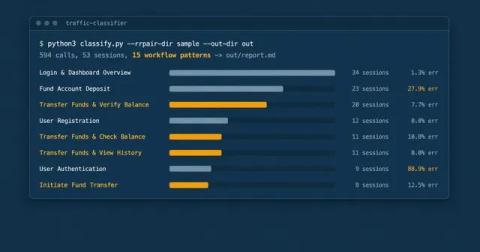
An engineering leader asked me a question a few weeks ago: could we read their business workflows out of API traffic instead of asking people to document them? I said it should be possible. Then I tried it. A few engineers know how the system really works. They know which calls make up a work order and which checks happen after a write. That stuff rarely makes it into the test plan. Usually it’s in somebody’s head. Sometimes it’s in several heads, with slightly different answers.
Monitor dependencies now available in the v3 API
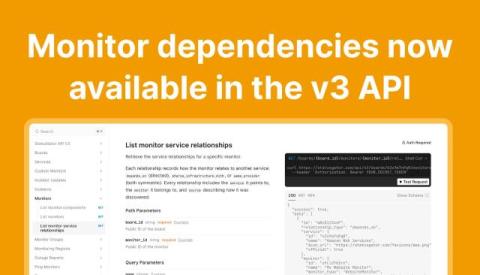
Monitor dependencies are now available through the StatusGator v3 API. The new endpoint lets you programmatically retrieve the relationships and dependencies associated with a monitor, giving your integrations and internal tools more context about the services each monitor relies on. Dependencies are already available in the StatusGator UI for Website, Ping, and Custom monitors, while StatusGator automatically identifies relationships for many Service monitors.

MCP vs API: How they work together and when to use each
Summary: An API defines how software interacts with a service. MCP defines a standard way for AI applications to discover and invoke tools exposed by a service. They usually work together: an MCP server can sit in front of APIs you already run, turning low-level operations into capabilities an agent can find and use at runtime. Your API may already expose everything an AI agent needs. The harder problem is helping the agent figure out which operations matter for the task it has been given.
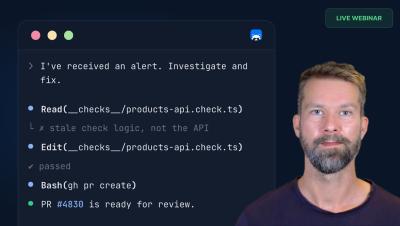
Let AI Agents Own Your Monitoring: From Setup to Auto-Fixed Incidents
Your AI agent can set up your monitoring, report on platform health, and open a PR to fix a failing check. All this works automatically. In this webinar, Stefan (Developer Relations at Checkly, Google Developer Expert & Playwright Ambassador) demonstrates how Monitoring as Code makes Checkly agent-friendly by design, and walks through three agentic workflows live.