Operations | Monitoring | ITSM | DevOps | Cloud

ChaosSearch Pricing Models Explained

ChaosSearch was built for live analytics at scale on cloud storage. Our architecture was designed for high volume ingestion of streams & analytics at scale via ElasticSearch & Trino API via a stateless fabric that can scale to meet the customers’ scale & latency requirements. Because we don’t store any data, under the hood, ChaosSearch is basically a set of containers that are deployed in cloud compute instances in a dedicated VPC to each customer managed by ChaosSearch.

How to Choose the Right Database in 2023

Databases are often the biggest performance bottleneck in an application. They are also hard to migrate from once being used in production, so making the right choice for your application’s database is crucial. A big part of making the right decision is knowing what your options are. The database landscape has been changing rapidly in the past few years, so this article will try to simplify things for you by going over the following topics.

Joins, pipes and more with the new Elasticsearch Query Language

The new Elasticsearch Query Language is a flexible, powerful, and robust query expression language to interrogate data. In this session learn how ESQL provides a superior query UX, a piped query language with join capabilities that fundamentally transforms and expands the analytics and data processing of Elasticsearch.

Elasticsearch and OpenSearch - not the same thing

Do you understand the differences between Elasticsearch and OpenSearch? We’ll lay them out for you. You’ll find that our take on emerging technologies is fundamentally transforming the opportunity to solve problems through search. Learn about innovation in areas like vector search and hybrid scoring or support for third-party natural language processing that help you unlock possibilities for new classes of searches through the application of machine learning. The result? Increased relevance with less burden on the developer and administrator. In this session, you'll learn all about these innovations, and how you can take advantage of them to drive success.

Using search effectively in taxonomies and correctly modeling your domain in Elasticsearch

Finding matches when using a taxonomy is a common problem. A notable challenge is mapping a user’s query to the entity (or results) expected when searching for an entity inside a catalog mapping. Functional textual search models tend to rely on exact match or partial match, but both can lead to a frustrating experience when users aren’t familiar with the domain. Basic models often fail to support user typos, synonyms, acronyms, and/or hyponyms/hypernyms. Learn how to tackle these challenges and make search more intuitive when using a taxonomy.

5 Redis data types in 5 minutes

Redis is a powerful in-memory data store that servers for a variety of use cases such as: caching, real time analytics or even fraud detection. It comes with a set of different data types and in this video we will learn about the 5 more common data types used in Redis. Sébastien Blanc's social media: CHAPTERS ABOUT AIVEN Aiven’s cloud data platform helps your business reach its highest potential by making your data work for you.

Cleaning and Interpreting Time Series Metrics with InfluxDB

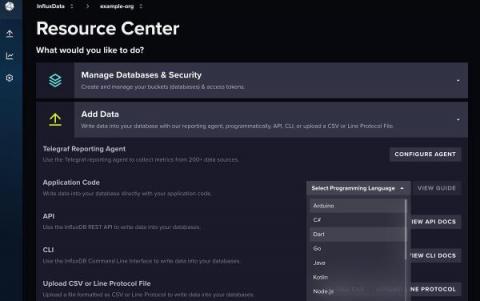
A look at how to use Flux for data cleansing and analytics through the browser and via Visual Studio. Time series data is data you want to analyze and monitor over time. For example, you might want to know the water levels over the course of the day for a plant, or how much sunlight it receives and when. This is a simple but easy-to-understand example. Obviously on a larger scale the stakes can be higher.

How do I write a query for log analytics?

Log management is the processes and tools that your DevSecOps team use to collect, store and manage log data. As they constantly assess your applications and systems for performance, log analytics comes into play to improve the efficiency and effectiveness of an organization, identify and troubleshoot problems, and monitor the health and performance of system. Looking for a proactive approach to find issues, bugs and threats? Interested in surfacing your business and user adoption insights?

What is a log analytics solution? A way to find and fix fast!

There is value in the machine data (logs and events) from your infrastructure and applications. However, storing and analyzing that data to extract that value can be a big (and expensive) undertaking for organizations. With log analytics, companies like yours can better understand your log data and take action to improve reliability and increase security. Log files are produced by applications, operating systems, networks and other components of a technology stack.