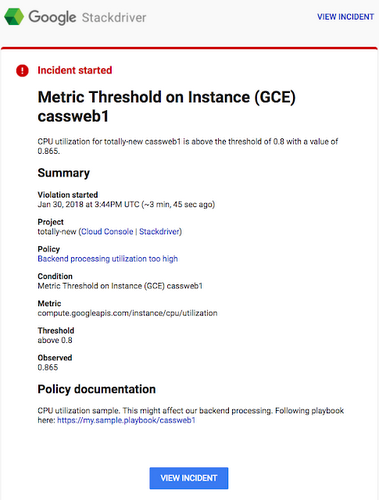
Dashboards are great, but what if you're not checking them? Wouldn't it be great to know when you have a huge spike in traffic, or if you're about to hit your concurrent connections limit for a single database? Don't worry, Google Stackdriver Alerts have you covered!
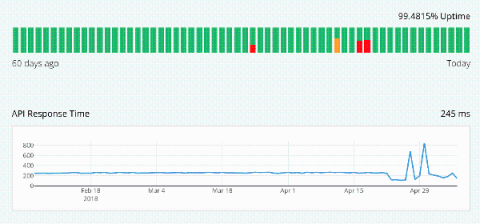
Not all websites are the same. From personal blogs to business websites, online shops to community forums, SaaS applications to video streaming services, websites come in all shapes, sizes and flavours. It follows that not all websites have the same uptime requirements. If a personal blog goes down for 20 minutes it might not be a big problem, but the same downtime for a popular online shop could be a major concern.
During a server outage, your IT team can feel pulled in two different directions: First, having to communicate with customers about the issue and second, fixing the actual problem. Since you want to keep your customers informed while working to resolve the issue, there’s a solution tailored to your team: A status page can help you communicate while keeping pages updated with specific, clearly-written automated messages.
AlarmsOne already has built-in integrations with SaaS-based help desk tools such as ServiceDesk Plus On-Demand, Zendesk, and Zoho Desk to help IT management and help desk teams stay on the same page.
We published open-source, simple and easy to use .NET Standard 2.0 library with some useful utilities.
A typical workday for your IT team may go from calm to all hands on deck. When a problem occurs on your servers, you may not know the cause right away, but before you can start figuring it out, customers are blowing up your phone and monitoring systems. Everything you do from this point has a timestamp attached to it. If you wait five minutes to put up a status page, that could equal 100 people who have submitted tickets. The longer you wait, the more people you will have to get back to.