Operations | Monitoring | ITSM | DevOps | Cloud

The Best AI App Builders for Small Businesses in 2026

TL;DR: The best AI app builder for small businesses in 2026 is Jotform AI App Builder for end-to-end workflow automation. Lovable is best for customer-facing web apps, Softr for portals, Glide for field operations, Adalo for native mobile apps, and Base44 for custom AI web apps. Small businesses rarely need an app in the abstract. They need a faster way to handle bookings, orders, client intake, approvals, inspections, payments, documents, and follow-up.

AI-Assisted Documentation Search Goes Conversational

Conversational AI has arrived in Alloy Software documentation, making it easier to find the exact answers you need. Ask a question, follow up naturally, and refine the response until you reach the right instructions or product details, without starting over or digging through pages. The redesigned experience keeps the conversation in context and lets you go as deep as you need.

Security at Scale: What Changes When Everyone Can Deploy using AI

In our first series post, The New Software Creator, we mapped out a structural shift in the industry: AI is turning non-technical team members into creators of software. In our second post, When Anyone Can Build Software, Deployment Governance Is What Keeps It Safe, we argued that deployment is the single control layer that can secure this explosion of output without choking innovation.

Your AI agents are lost: give them a graph

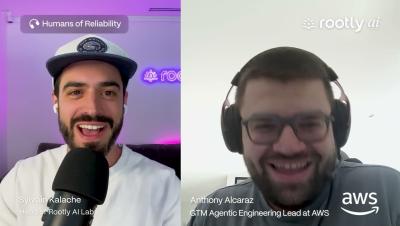
The biggest limitation facing enterprise AI agents may not be the model. It may be the context surrounding it. Anthony Alcaraz, Senior AI/ML Portfolio Growth Manager at AWS and co-author of O'Reilly's *Agentic GraphRAG*, joins Humans of Reliability to explain why reliable agents need more than a vector database and a large context window. They need structured knowledge they can navigate, memory they can prune, constraints they can follow, and feedback loops that help them improve.

Introducing AI Agent Deployment in Harness Continuous Delivery | Harness Blog

‍Teams building agents have converged on something that looks a lot like the software development lifecycle, but reshaped around a system whose output isn't deterministic: prototype an agent against a framework, evaluate it against a dataset of expected behavior, deploy it somewhere real, observe how it behaves against live traffic, and feed what you learn back into the next prototype. Call it the agent development lifecycle (Agent DLC).

Introducing Harness AgentTrace: An Observability and Guardrail Framework for AI Agents | Harness Blog

AI agents fail differently from the software we spent the last two decades learning to monitor. We hear some version of the same story from teams shipping agents to production: an agent starts producing wrong answers. Not obviously broken: confident, well-formatted, plausible wrong. The logs are clean, latency looks healthy, and error rates sit at zero. Nothing flags a problem. A user eventually does.

MCP for SLA Monitoring: Uptime, MTTR & MTTA

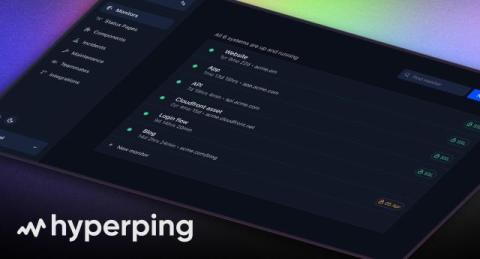
MCP for SLA monitoring gives an AI agent direct access to measured uptime, mean time to resolve (MTTR), mean time to acknowledge (MTTA), outages, and reliability risks. With Hyperping, you can ask Claude, Cursor, Codex, or another MCP client for an SLA report and get an answer based on your live monitoring data instead of copying numbers between dashboards. The distinction between monitoring data and SLA compliance matters. Hyperping measures availability and incident response.

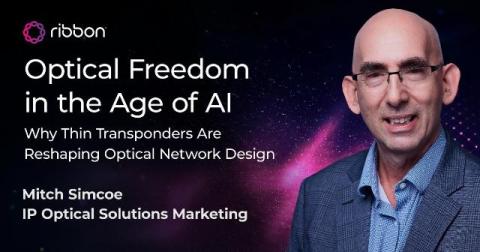
Optical Freedom in the Age of AI: Why Thin Transponders Are Reshaping Optical Network Design

AI is driving the next wave of digital transformation, but it is also creating an unexpected challenge for network operators: optical capacity is becoming a strategic bottleneck. The same AI boom fueling billions of dollars in data center investment is placing unprecedented demand on optical networking infrastructure.