Operations | Monitoring | ITSM | DevOps | Cloud

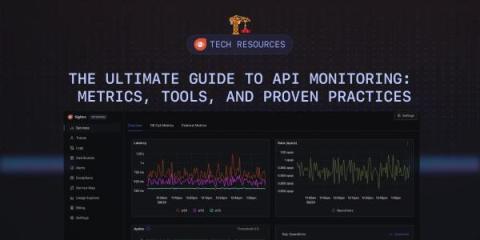
The Ultimate Guide to API Monitoring in 2025 - Metrics, Tools, and Proven Practices

According to Akamai, 83% of web traffic is through APIs. Microservices, servers, and clients constantly communicate to exchange information. Even the Google search you made to reach this article involved your browser client calling Google APIs. Given APIs govern the internet, businesses rely on them heavily. API health is directly proportional to business prosperity. This article covers everything about API monitoring, so your API infrastructure’s health is always in check .


6 Best Azure FinOps Tools for Cost Optimization (2025)

FinOps is an evolving concept increasingly practiced in cloud computing organizations to manage and optimize their infrastructure cost. It requires team collaboration among Finance, Engineering and IT Operations to gain a deep understanding of the expenditure, take financial accountability, and make informed decisions to maximize the business performance.

7 Best Azure Service Bus Monitoring Tools in 2025

Azure Service Bus is a cloud messaging service that transfers information between services running in both the cloud and on-premises. So, it becomes essential to ensure the performance and availability of Service Bus as it might be used in applications and integrations for transferring business-critical messages. To help you with that, we have listed and compared the top Azure Service Bus monitoring tools with their features.

Top 11 Grafana Alternatives & Competitors [2025]

Are you looking for Grafana alternatives? Then you have come to the right place. Grafana started as a data visualization tool. It slowly evolved into a tool that can take data from multiple data sources for visualization. For observability, Grafana offers the LGTM stack (Loki for logs, Grafana for visualization, Tempo for traces, and Mimir for metrics). You need to configure and maintain multiple configurations for a full-stack observability setup.

Best cloud monitoring tools in 2025 (64 analyzed, 6 top picks)

Nowadays, almost half of traditional small businesses (and nearly 2/3rds of small tech companies in particular) employ cloud infrastructure or hosting services, and for good reasons. As a reliable uptime monitoring service, we at Hyperping fully understand the importance of monitoring your assets to keep track of functionality and performance. Monitoring every aspect of your cloud infrastructure requires a lot of different tools. And the space is crowded!

Top 14 ELK alternatives [open source included] in 2025

ELK is the acronym Elasticsearch, Logstash, and Kibana, and combined together, it is one of the most popular log analytics tools. Elastic changed the license of Elasticsearch and Kibana from the fully open Apache 2 license to a proprietary dual license. The ELK stack is also hard to manage at scale. In this article, we will discuss 14 ELK alternatives that you can consider using.

Kibana vs. Grafana - A Scenario-Based Decision Guide [2025]

Both Kibana and Grafana are data visualization tools providing users capabilities to explore, analyze and visualize data with dashboards. The difference between Kibana and Grafana lies in their genesis. Kibana was built on top of the Elasticsearch stack, famous for log analysis and management. In comparison, Grafana was created mainly for metrics monitoring supporting visualization for time-series databases.

DataDog vs Prometheus - Comprehensive Comparison Guide [2025]

Both DataDog and Prometheus are application monitoring tools aimed to improve application performance. While Datadog is a cloud-based SaaS solution, meaning there's no need to install or maintain any infrastructure, Prometheus is an open-source tool that requires manual download and installation on your infrastructure. Let us compare DataDog and Prometheus to see which tool suits The biggest difference between Datadog and Prometheus is that while Prometheus is open-source, Datadog is proprietary.

5 Best Practices for Managing Risk When Trading Cryptocurrency

Cryptocurrency trading offers lucrative opportunities but comes with significant risks due to the market's inherent volatility. Price swings are frequent, and even promising investments can decline unexpectedly, emphasizing the importance of risk management. With Bitcoin ETFs approved and the 2024 Bitcoin Halving, the market is entering a pivotal and exciting phase. A potential bull run could finally boost global adoption, making crypto a cornerstone of financial evolution.