Operations | Monitoring | ITSM | DevOps | Cloud

How to observe your Asterisk instance with Grafana Cloud

Observability and monitoring is a fundamental part of the contact center environment. When there are thousands of live voice and other multi-channel interactions happening, it is crucial to keep a close eye on the system because any issue in service gives an instant blow to the customer experience. Asterisk is a free and open source framework for building communications applications and is sponsored by Sangoma.

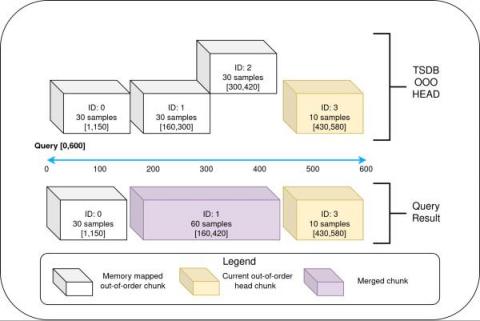
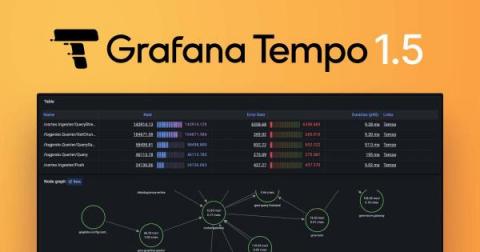
New in Grafana Tempo 1.4: Introducing the metrics generator

Grafana Tempo 1.4 has been released and features a new optional component: metrics generator, which automatically generates RED metrics and service graphs from your traces. We’re actively rolling out the metrics-generator service to our own Grafana Cloud offering and are looking for Grafana Cloud Traces customers wanting early access. If interested, you can email our support team for more details.

How Theia Scientific and Volkov Labs use Grafana and AI to analyze scientific images

Dr. Christopher Field is Co-Founder, President, and Principal Investigator at Theia Scientific. With formal education in analytical chemistry and instrumentation, Chris has expertise in scientific hardware and software design, deploying embedded Linux devices for Internet of Things (IoT) and sensor fusion applications, and developing computer vision and image processing pipelines for cell analysis.

Deployment-time testing with Grafana k6 and Flagger

When it comes to building and deploying applications, one increasingly popular approach these days is to use microservices in Kubernetes. It provides an easy way to collaborate across organizational boundaries and is a great way to scale. However, it comes with many operational challenges. One big issue is that it’s difficult to test the microservices in real-life scenarios before letting production traffic reach them. But there are ways to get around it.

Introducing the new Confluent Cloud integration for Grafana Cloud

At Grafana Labs, we’re continuing to expand our platform of Grafana Cloud integrations that make it easier than ever to connect and monitor external systems. These integrations enable you to answer the big picture questions in your organization and tell your observability story.

Set up and observe a Spring Boot application with Grafana Cloud, Prometheus, and OpenTelemetry

Spring Boot is a very popular microservice framework that significantly simplifies web application development by providing Java developers with a platform to get started with an auto-configurable, production-grade Spring application. In this blog, we will walk through detailed steps on how you can observe a Spring Boot application, by instrumenting it with Prometheus and OpenTelementry and by collecting and correlating logs, metrics, and traces from the application in Grafana Cloud.

New in the Kubernetes integration for Grafana Cloud: Kubernetes events, Pod logs, and more

The Kubernetes integration for Grafana Cloud helps users easily monitor and alert on core Kubernetes metrics using the Grafana Agent, our lightweight observability data collector optimized for sending metric, log, and trace data to Grafana Cloud. It packages together a set of easy-to-deploy manifests for the Agent, along with prebuilt dashboards and alerts.

Video: How to migrate to Grafana Mimir in less than 4 minutes

Since we launched Grafana Mimir — the most scalable, most performant open source time series database in the world — we have answered many of your questions about our latest open source project, including how to pronounce it. (All together now: /mɪ’mir/.) We have also walked through how we scaled Grafana Mimir to 1 billion active series.

eCommerce giant Blinkit's journey from ELK Stack to Grafana Cloud

The promise: Order any groceries and essentials from Blinkit’s mobile app, and they’ll be delivered to your doorstep within 10 minutes. The process: Very difficult with a legacy logging tool. For Blinkit, the instant delivery service formerly known as Grofers that serves millions of consumers across India, their tech stack was beginning to interfere with business operations at a time when the company was hyperscaling due to its popularity.