Operations | Monitoring | ITSM | DevOps | Cloud

New in Grafana 8.5: updated panels, new RBAC features, simplified reporting, and more!

Grafana 8.5 is here! Download Grafana 8.5 We’ve worked on a variety of improvements that focus on Grafana’s usability, data visualization, and security. For a full list of new features and capabilities, check out our What’s New in Grafana 8.5 documentation. You can get started with Grafana in minutes with Grafana Cloud. We have free and paid Grafana Cloud plans to suit every use case — sign up for free now.

How Grafana Mimir's split-and-merge compactor enables scaling metrics to 1 billion active series

Grafana Mimir, our new open source time series database, introduces a horizontally scalable split-and-merge compactor that can easily handle a large number of series. In a previous blog post, we described how we did extensive load testing to ensure high performance at 1 billion active series. In this article, we will discuss the challenges with the existing Prometheus and Cortex compactors and the new features of Grafana Mimir’s compactor.

Service level objectives: How SLOs have changed the business of observability

Forget the latest tech gadgets and the newest products. One of the most talked about trends in observability right now? “SLOs have really become a buzzword, and everyone wants them,” said Grafana Labs principal software engineer Björn “Beorn” Rabenstein on a recent episode of “Grafana’s Big Tent,” our new podcast about people, community, tech, and tools around observability.

The ins, outs, and benefits of using Grafana Loki as a backend logging solution

As organizations have moved from monolithic to microservice-based architectures, there has been an explosion in the volume of logs generated. Most logging solutions create a full index of the logs and use SSD drives, which results in costly compute and storage resources for logs that are mostly write once, read never. We created Grafana Loki to solve these problems. Loki only indexes the metadata of the log lines, relies on inexpensive object storage, and is architected for scalability. In addition, Loki takes advantage of parallelism and sharding that results in fast query performance. In this session, we will discuss the benefits of using Loki as a backend logging solution.

Analyzing Cardinality in Grafana Cloud and Grafana Enterprise Metrics

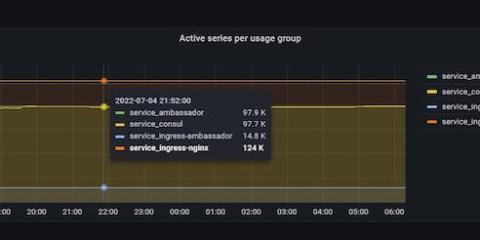
Cardinality Analysis of metrics is an enabler to reducing costs and focusing observability on the necessary metrics to identify and investigate where issues are occurring in your services. Grafana has added cardinality management dashboards to Grafana Cloud and Grafana Enterprise Metrics to make this an easy and fast process. In this introductory session, we will provide an overview of the Grafana Cardinality features and offer a set of discovery questions to help you with the process.

Video: Get started with Grafana Mimir in minutes

Since we launched Grafana Mimir — the most scalable, most performant open source time series database in the world — we have answered many of your questions about our latest open source project, including how to pronounce it. (All together now: /mɪ’mir/.) We have walked through how we scaled Grafana Mimir to 1 billion active series. And we will be hosting webinars to showcase cutting-edge features like query sharding and the two-stage compactor.

How AgriTech used IoT and Grafana to help industrial hemp farmers hit a new production high

In 2019, Alexander Mann was working in the microchip industry, putting in 12-hour shifts that left no time for him to tend to his large vegetable garden. “I started looking for ways that I could remotely water or check on my plants,” he says. Products that could help him were either too costly for a hobby gardener or required special internet connections, so Mann decided to learn about IoT and create his own setup.

Monitoring critical systems at Roblox with Grafana and Grafana Agent

It’s like an obby unto itself: With roughly 100 million global active users, how does an observability team monitor operations and troubleshoot problems that pop up across more than 10,000 servers? In this session, you’ll get an inside look at how the Roblox team evolved their observability platform to combine a multitude of data sources, from low-level hardware health to high-level performance metrics. Grafana Agent plays a key role by replacing many special-purpose pipelines with a single, easy-to-manage tool. Roblox’s observability team has met growing demand to provide actionable insights to hundreds of engineers, covering dozens of data sources and thousands of Grafana dashboards, which all help keep its infrastructure running and ready for play.

New in Grafana Enterprise Metrics 2.0: Cross-tenant alerting and recording rules

On the heels of launching our new open source TSDB Grafana Mimir, we are excited to introduce Grafana Enterprise Metrics 2.0. GEM 2.0 is built on top of Grafana Mimir 2.0, our easy-to-operate, high-scale database which we’ve shown can handle upwards of 1 billion active series. That means that GEM 2.0 inherits all of the highlights of Mimir, including easy deployment, native multi-tenancy, high availability, durable long-term metrics storage, and exceptional query performance.

New in Grafana Loki 2.5: Faster queries, more log sources, so long S3 rate limits, and more!

I’m very excited to tell you all about the latest Grafana Loki installment, 2.5! A huge amount of work, nearly 500 PRs, has gone into Loki between v2.4 and now. The major themes for this release are improved performance, continuing ease of operations, and more ways to ingest your logs. I usually find myself the most excited about performance improvements, so let’s start there.