Operations | Monitoring | ITSM | DevOps | Cloud

How to Enable PHP Error Reporting

Errors are undesirable for users and you should do everything in your control to keep users away from them. However, they are of utmost importance for developers. They allow developers to understand the inaccuracies and vulnerabilities in their code by alerting them when their code breaks. They also provide relevant information about what went wrong, where, and what can be done to make amends.

Deploying a Performant PHP Application on Kubernetes with Rancher

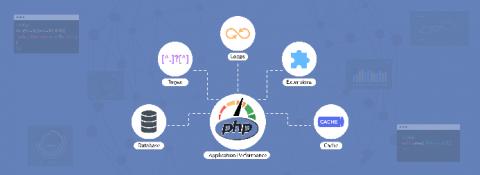
PHP is one of the most popular programming languages on the web. It powers many widely used content management systems like WordPress and Drupal, and provides the backbone for modern server-side frameworks like Laravel and Symfony. Despite its popularity, PHP has a bit of a reputation for being slow and hard to maintain. It has gotten better in recent years, but there are two features that high-performance PHP applications will likely need: OPcache and PHP FastCGI Process Manager (PHP-FPM).

PHP Memory Leaks, How to Find and Fix Them

Memory leaks can happen in any language, including PHP. These memory leaks may happen in small increments that take time to accumulate, or in larger jumps that manifest quickly. Either way, if your app has a memory leak, sooner or later it will cause problems. The source of and solution to PHP memory leaks aren’t always obvious, so you may need to try a few strategies before you eliminate the problem.

How we use the powerful new Icinga PHP Library to build the Icinga DB Web UI

When building Icinga DB Web we completely rewrote the basic Icinga Web UI. The “monitoring module”, which it was called before. While this existed for some time and the and the underlying concepts were already used in the Icinga Director, we took the chance and brought our Web UI to a new level. In Icinga IPL every UI element is represented by a PHP class.

Introducing ipl/Sql - OOP SQL abstraction for PHP

During the past few months while working on Icinga DB, we have tested our existing libraries on how we work with data and how we present them programmatically. Maybe it was because we were doing something new with Icinga DB or we weren’t entirely happy with the existing code. In any case, it was time for new libraries :-). The IPL – Icinga PHP Library was born. And we want to share that work starting with ipl/Sql an OOP SQL abstraction for PHP.

PHP Json_encode: Serialize PHP Objects to JSON

PHP is a server-side scripting language for creating your website’s backend system that can serve webpages, communicate with databases, and exchange data over the internet. A decent backend framework like PHP needs to be capable of providing and processing data in any format (e.g., XML, JSON, etc.) to be socially accepted in a society of skilled web development frameworks.

Tutorial: Log to Console in PHP

“All code and no logging makes John a black box error-prone system.” Logging is a key aspect of monitoring, troubleshooting and debugging your code. Not only does it make your project’s underlying execution more transparent and intelligible, but also more accessible in its approach. In a company or a community setting, intelligent logging practices can help everyone to be on the same page about the status and the progress of the project.

Programmatically Adding Laravel Middleware

When it comes to web development, middleware is often the key to ensuring everything connects up - even if some of the pieces don’t always match up. HTTP Middleware is a mechanism used to conveniently filter HTTP requests coming into your web application. When it comes to PHP, frameworks often help us get our applications to handle workloads vanilla PHP might have a harder time managing. Frameworks help to manage the underlying structure of an application while supporting existing PHP standards.

NGINX 502 Bad Gateway: PHP-FPM

This post is part of a series on troubleshooting NGINX 502 Bad Gateway errors. If you’re not using PHP-FPM, check out our other article on troubleshooting NGINX 502s with Gunicorn as a backend. PHP-FastCGI Process Manager (PHP-FPM) is a daemon for handling web server requests for PHP applications. In production, PHP-FPM is often deployed behind an NGINX web server. NGINX proxies web requests and passes them on to PHP-FPM worker processes that execute the PHP application.