The latest News and Information on Observabilty for complex systems and related technologies.
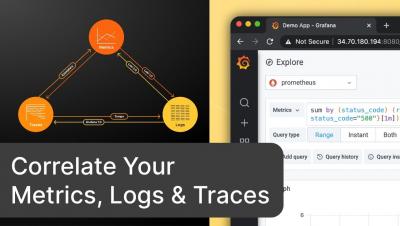
Moving to a scalable, distributed microservice architecture poses a great deal of challenges for any organization. It gets harder to understand the system and pinpoint where errors originate. Logs get much messier, and stitching together a coherent picture of a particular request can be time-consuming or downright impossible. Distributed tracing can help with all of that.
I’ve tackled this question before: how much should my observability stack cost? While the things in that post are true now as ever, I did end on one somewhat vague conclusion. When it came to figuring out exactly what you need in your stack by drawing a straight line from the business case to the money you spend, my conclusion was that “it depends.” That’s how we approached pricing at Honeycomb: it depends on your needs, so we should give you many different options.
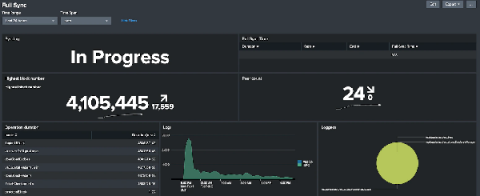
Logging is an essential method to understanding what’s happening in your environment. Logs help developers and system administrators understand where and when things have gone wrong. Ideally, logs on their own would suffice as indicators of what’s happening. However, there’s far too many log messages being produced in today’s world and most don’t contain the information we actually need.
Considering the scale of log data that modern cloud environments generate, it’s oftentimes prohibitively expensive to index all of it. For monitoring and logging, cost management is just as important as in other parts of the business. Whether sudden spikes of log data overwhelm databases or good business generates more activity in your environment, teams should anticipate and mitigate the steep costs that result from high log volumes.
At Honeycomb, we’ve been listening to your feedback. You want easier ways to predict usage and scale your observability spend with your business. What would it look like to meet you where you already are, using similar terms, and give you more control with a simpler experience? We think that means reimagining the customer experience into one that centers around an event-based model. But what exactly is an event? What does that mean for your team’s observability journey?
Observability is more than tooling. Of course having the right tools in place so you can ask arbitrary questions about your environment, without having to know ahead of time what you wanted to ask, is critical. Finding the unknown unknowns is the coveted observability sweet spot. However, it’s the actual doing it that proves a bit more challenging especially when you’re weaning off legacy tools.
We are excited to announce a strategic partnership with Google Cloud to bring real-time observability into Google Cloud Services and modern applications for our joint customers. Cloud has become essential to modernizing IT environments and enabling the digital initiatives of organizations large and small. Organizations undertake IT modernization – including cloud adoption – to accelerate innovation and increase operational efficiency while optimizing IT spend.