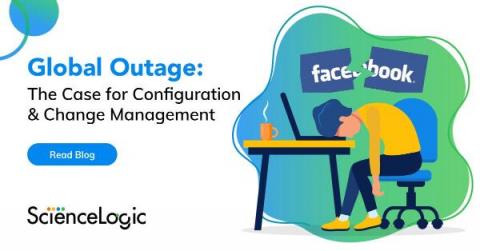
If you were one of billions of frustrated users of Facebook who weren’t able to access their accounts Monday, rest assured in knowing that downtime is a thing of the distant past and the mega-social media platform is back online. End users can now relax knowing that the brush fire has been extinguished. Remarkably, the nearly seven-hour outage could not be attributed to the deluge of recent high-profile attacks on government, enterprise, and educational servers throughout the world.
The Cybersecurity Maturity Model Certification (CMMC) is a security framework implemented by the US Department of Defense (DoD) to improve protection of the defense industrial base. Like other security frameworks, the CMMC has a collection of controls for processes and practices with the goal of achieving a certain level of cybersecurity maturity.
Since we launched Puppet Comply last year, we’ve been working hard to build out the solution’s capabilities so that we can provide our customers with more options in implementing a continuous compliance program, and become more proactive and efficient in how they manage compliance. A key activity in any strong continuous compliance program is remediation.
In the age of cloud, digital transformation, application modernization, and the mobile economy, the network is the lifeblood behind enabling excellent customer experiences. Network Operations (NetOps) and IT Operations (ITOps) teams are constantly aware that a disruption in core network systems performance can have a massive impact on their business.
When we discuss cybersecurity and the threat of cyber attacks, many may conjure up the image of skillful hackers launching their attacks by way of undiscovered vulnerabilities or using cutting-edge technology. While this may be the case for some attacks, more often than not, vulnerabilities are revealed as a result of careless configuration and inattention to detail. Doors are left open and provide opportunities for attacks.
Modern software development increasingly relies on distributed, service-based architectural patterns to achieve scalability, reliability, and rapid build, test, and release cycles. Two of the most popular service-based approaches are service-oriented architecture (SOA) and microservices. In this article, we will examine both approaches to identify their similarities and differences as well as some use cases for each.