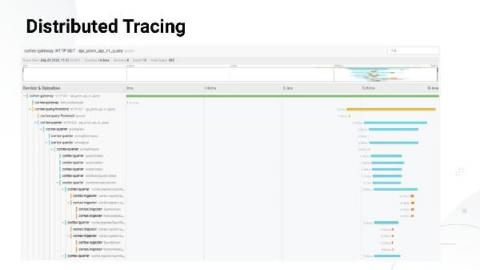
Most people are instrumenting their applications, with logs being an easy first step into the observability world, followed by metrics. Tracing lags behind these two and is maybe a little less used than other observability patterns. We hope to change that.
Databases are everywhere these days, every application uses databases to store, organize and retrieve data. It has become more efficient than paper storage since it does not require more space and can also be easily accessed by multiple users at a time. There is an increase in demand for processing vast collections of data and this has become the most important reason for several companies to use databases.
Intercept X is Sophos’ endpoint security solution, including anti-ransomware, zero-day exploit prevention, plus managed endpoint defense and response. It employs a layered approach reliant on multiple security techniques for endpoint detection and response (EDR). Those tactics include app lockdown, data loss prevention, web control and malware detection.
What does reliability look like at a company that has thousands of employees and provides critical communication services to over 150,000 customers? We talked with Tyler Wells, Senior Director of Engineering at Twilio, to learn how he and his team created a culture of reliability at Twilio. He talked in depth about his experiences developing reliability goals, building reliability practices, and aligning engineering teams on these objectives.
While technology plays a large part in the efficiency of warehouse operations, employees are the foundation. Prioritizing User Experience (UX) on employees’ mobile data entry devices, from handheld devices to fork truck-mounted barcode scanners, is crucial to maximizing productivity. SAP EWM provides the back-end functionality, but it is on these devices that everything comes together as they determine how, when, and where material handlers move products through the supply chain.