Making Your On-call and Incident Management Program Stick
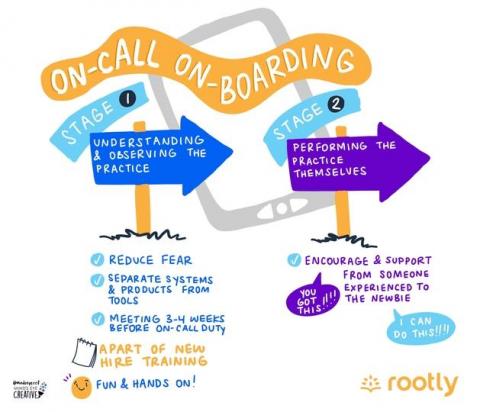
Maintenance of your incident management practice is as important as creation - find out what you can do to keep your engineering organization strong and consistent year over year.


Maintenance of your incident management practice is as important as creation - find out what you can do to keep your engineering organization strong and consistent year over year.
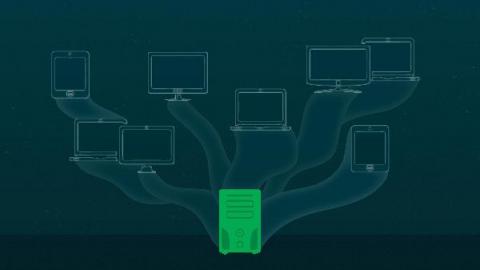
Virtualization has been with us since the 1960s. In computer science terms, it is about as old as the hills. Yet this old-school idea has never been more relevant. We all know hardware is expensive. Despite the cost, many businesses squander their precious processing power. All too often, a “one server, one purpose” mindset leads IT departments to waste server capacity. With virtualization, we leave this myopic view of server management in the dust.
You’ve seen the movie. You know the scene. There’s a diabolical criminal on the loose, a city in fear—and one obsessed investigator in dogged pursuit of justice. Her eyes are bloodshot from too many sleepless nights, too much caffeine, and too many cigarettes. She paces frantically in a windowless room. On the wall is a corkboard festooned with maps, notes, and pictures, and a web of red string is woven haphazardly across a clutter of seemingly unrelated clues.
Every product is a never-ending journey and Ivanti Neurons for Spend Intelligence is no exception to the rule. From the very beginning, our teams have set out to target core fundamental problems that we hear people in asset management struggling with on a day-to-day basis. To imagine this on more metaphorical level, just think for a moment: you are going on a road trip and your next destination is an amazing seaside resort with fabulous weather with your every want and desire close at hand.
Engineering time is a precious resource. We often have to balance many tasks and often conflicting priorities. In this article, we’ll look at ten activities for which allocating more time can be beneficial. Let’s learn from the mistakes of others.
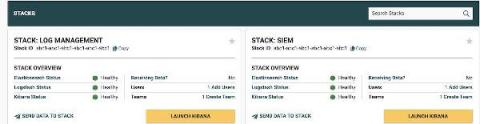
We are pleased to announce our newly launched dashboard design which we have created to assist cross team collaboration for users that prefer to use multiple Stacks per account. We understand that Cybersecurity specialists, Sysadmins, Product owners, developers and CTOs may all have different requirements for using our platform for logs and metrics analysis.
Developers of any skill set find it frustrating when we don’t have access to the information we need. We want easy and complete access to application logs so that we can troubleshoot application problems. Quickly resolving issues requires a complete picture of what’s going on. Using the wrong tools limits our ability to determine what’s wrong, slowing the repair process.
Generating and collecting logs is one thing. Generating and collecting actionable logs can be quite another. That's a problem because logs that are not actionable – meaning they can be easily used to derive valuable insights or resolve issues – are not very valuable. If you don't generate actionable logs, you might as well not log at all. Fortunately, ensuring that you generate useful logs is not tricky. Keep reading for seven tips on making your logs actionable and valuable.
Developers must have access to the information that they need. Accessing this information, however, can be time-consuming. With the wrong tools or workflow, it’s frustrating and challenging to filter logs by source. Tags are an easy solution from LogDNA that helps developers get a more granular view of what’s going on in our services.