When it comes to observability, your organization will have no shortage of options for tools and platforms. Between open source software and proprietary vendors, you should be able to find the right tools to fit your use case, budget and IT infrastructure. Observability should be cost-efficient, easy to implement and customers should be provided with the best support possible.
Our friends at Tracetest recently released an integration with Honeycomb that allows you to build end-to-end and integration tests, powered by your existing distributed traces. You only need to point Tracetest to your existing trace data source—in this case, Honeycomb. This guest post from Adnan Rahić walks you through how the integration works.
Observability solutions can easily and rapidly get complex — in terms of maintenance, time and budgetary constraints. But observability doesn’t have to be hard or expensive with the right solutions in place. The future of your observability can be a bright one.
Data Lakes can be difficult and costly to manage. They require skilled engineers to manage the infrastructure, keep data flowing, eliminate redundancy, and secure the data. We accept the difficulties because our data lakes house valuable information like logs, metrics, traces, etc. To add insult to injury, the data lake can be a black hole, where your data goes in but never comes out. If you are thinking there has to be a better way, we agree!
The Accelerate State of Devops Report highlights four key metrics (known as the DORA metrics, for DevOps Research & Assessment) that distinguish high-performing software organizations: deployment frequency, lead time for changes, time-to-restore, and change fail rate. Observability can kickstart a virtuous cycle that improves all the DORA metrics.
The needs of observability workloads can sometimes be orthogonal to the needs of compliance workloads. Honeycomb is designed for software developers to quickly fix problems in production, where reducing 100% data completeness to 99.99% is acceptable to receive immediate answers. Compliance and audit workloads require 100% data completeness over much longer (or "infinite") time spans, and are content to give up query performance in return.
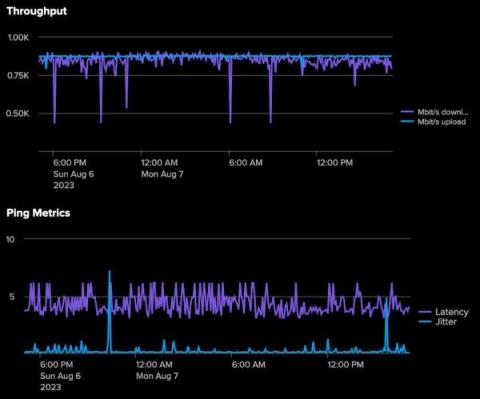
In the world of observability, having the right amount of data is key. For years Apica has led the way, utilizing synthetic monitoring to evaluate the performance of critical transactions and customer flows, ensuring businesses have important insight and lead time regarding potential issues.