Operations | Monitoring | ITSM | DevOps | Cloud

How telco companies can reduce 5G infrastructure costs with open source

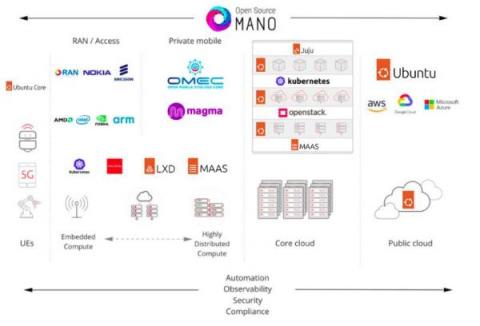
5G has the potential to revolutionise the telecommunications industry, offering high speed and connectivity for a wide range of devices ranging from radio access networks (RAN), user equipment (UE), and core networks. However, the high costs associated with 5G infrastructure have been a significant blocker for adoption, hindering innovation and growth in this area. This blog discusses the primary challenges faced in the telecom industry and how open source technologies are helping to resolve them.

Docker container security: demystifying FIPS-enabled containers with Ubuntu Pro

In today’s rapidly changing digital environment, the significance of robust Docker container security measures cannot be overstated. Even the containerised layer is subject to compliance standards, which raise security concerns and compliance requirements. Docker container security measures entail safeguarding our lightweight, appliance-type containers –each encapsulating code and its dependencies– from threats and vulnerabilities.

Business benefits of artificial intelligence in retail

The retail industry is going through a period of major upheaval. AI is transforming the landscape at a rapid pace. Grand View Research evaluated the market value at USD 5.79 billion in 2021 and this is expected to grow at a 23.9% compound annual growth rate (CAGR) from 2022 to 2030. For retailers, this translates into a need to adapt to an entirely new paradigm of customer expectations.

Ubuntu Core as an immutable Linux Desktop base

Canonical began the development of Ubuntu Core in 2014, to create a fully-containerised platform for IoT. In Ubuntu Core, we use the same kernel container technology that Docker and LXC are built on, to put every component of the system into a secure sandbox, with well-defined upgrade and rollback. We did this to enable autonomous connected Internet of Things devices to receive updates which they could apply without human intervention, to address security and business needs at the edge.

How to secure your MLOps tooling?

Generative AI projects like ChatGPT have motivated enterprises to rethink their AI strategy and make it a priority. In a report published by PwC, 72% of respondents said they were confident in the ROI of artificial intelligence. More than half of respondents also state that their AI projects are compliant with applicable regulations (57%) and protect systems from cyber attacks, threats or manipulations (55%). Production-grade AI initiatives are not an easy task.

Secure containerised Ceph with Ubuntu container images

As we announced at Cephalocon 2023 in Amsterdam, Canonical has started to make container images for Ceph available. We received lots of questions at the booth about what it means to the average Ceph user who has or wants to deploy Ceph on Ubuntu. In this blog post, we will cover the benefits to users who are running containerised Ceph on Ubuntu, and specifically how these images can provide an improved security posture.

AI in the public sector: practical applications and use cases

The public sector is investing heavily on artificial intelligence and machine learning initiatives. Deloitte AI Institute reported that 60% of government AI and data analytics investments aim to directly impact real-time operational decisions and outcomes by 2024. From automating redundant tasks to increasing the quality of services offered to citizens, public sector institutions have a wide range of applications where they could implement AI.

Docker vs Snaps: a side by side comparison

The Docker project was initiated by dotCloud, a platform-as-a-service (PaaS) company that created Docker to run their internal infrastructure. Slowly, Docker became more successful than any of their other products, so dotCloud rebranded as Docker Inc. Docker provides easy-to-use tooling and grew into an entire ecosystem for container management.

Matter on Ubuntu: getting started with the standard for smart home devices

Canonical joined the Connectivity Standards Alliance last year to lead the charge for Linux in the smart home. The Matter standard is a particular focus for us. Its secure design and open ecosystem align well with Ubuntu’s own values of security and openness. Ubuntu Core and Matter make for a powerful pair. Ubuntu Core’s containerisation makes it a highly secure OS that pairs well with the highly secure protocol.