Operations | Monitoring | ITSM | DevOps | Cloud

How to detect broken links with Playwright

One of our Slack community members recently asked if they could use Playwright and Checkly to detect broken links on their sites. They certainly can, and the answer to this question covers so many different Playwright concepts that it makes a perfect case for sharing Playwright features with the community. Let's unveil some links going nowhere! If you prefer the video version of this tutorial,

How to test and monitor your APIs with Playwright

You probably know that Microsoft’s Playwright is a solid tool for end-to-end testing, enabling you to control headless browsers and check essential user flows. But did you know that you can also use Playwright for API testing? If you didn’t, then this guide is for you. In this post, we’ll explore how Playwright can be used to test a GraphQL API (but don’t worry if you’re using REST; Playwright can handle any HTTP-based API).

How to apply Playwright test steps with TypeScript decorators

You can write Playwright end-to-end testing code using JavaScript or TypeScript. Which one should you choose? When I started writing my first automated browser tests, I went with JavaScript because I couldn't be bothered with the type wrangling. I just wanted to get something off the ground quickly. YOLO, right? Today, though, there are two reasons why I last wrote a JavaScript-first Playwright test a very long time ago.

Software Deployment Best Practices for Modern Engineering Teams

Adopting best practices for software deployment is essential to maintaining a high standard of quality, minimizing downtime, and ensuring that your applications meet user expectations. Here are five best practices to help you deploy your software more securely and reliably.

Make Your End-to-end Tests More Stable with Playwright's User-first Selectors

When testing and monitoring websites end to end with Playwright, choosing the right locators is crucial. Proper locators help create tests that are less flaky and more reliable. Let's explore user-first locators and how to filter locators for more robust tests.

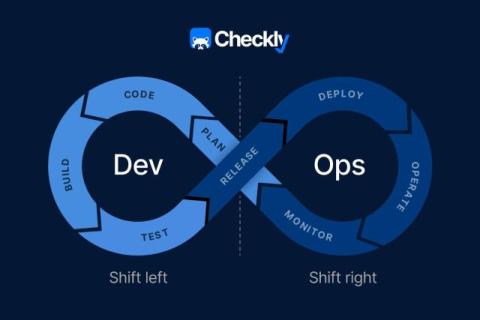
From Basic Monitoring to Modern Observability: Shifting Right and Observability as Code

I've been in the observability market long before it even had that name. Over the years, observability has undergone a significant transformation. As someone who has witnessed these changes firsthand, I can attest to the dynamic nature of this field. In the early days, it was largely about basic monitoring: tracking system metrics, lots of logs, and simple alerts.

How to Speed up your Playwright Tests with shared "storageState"

What are the two things making your end-to-end test investment a failure? Firstly, it's test flakiness. If you've invested days (if not months) in creating your test suite and it didn't turn out to be like this one trustworthy friend you have in your life for decades, you failed. You failed because eventually, you'll discover that every moment waiting for retrying tests became a burden.

Announcing $20M to Enable Engineers to Detect and Resolve Issues 10x Faster With Checkly

Our mission at Checkly is to enable engineers to detect and resolve issues 10x faster. We are very excited to announce $20 million in Series B funding led by Balderton, alongside the participation of our existing investors Accel and CRV.

How to add Type Checking and Linting to your Playwright Project

If you bet on end-to-end testing or even synthetic monitoring, there’s a high chance that you use Microsoft's Playwright. And if you have Playwright in your toolchain, you probably adopted TypeScript, too. It's an easy choice because of its rock-solid auto-completion and type safety. With this setup, you can enjoy the beautiful DX (developer experience) and safely refactor your ever-growing code base without worrying about runtime exceptions because of TypeScript's type checking, right? Wrong!