Why Whatnot Chose Datadog Synthetic Monitoring to Automate Backend Testing
Hear firsthand from an engineer at Whatnot why they chose Datadog Synthetic Monitoring and how the solution supports an automated testing process.


As the world’s leading local delivery platform, Delivery Hero brings groceries and household goods to customers in more than 70 countries. Their technology stack comprises over 200 services across 20 Kubernetes clusters running on Amazon EKS. This cloud-based, containerized infrastructure enabled them to scale their operation to support increasing demand as the volume of orders placed on their platform doubled during the pandemic.
Distributed tracing enables you to monitor and observe requests as they flow through your distributed systems to understand whether these requests are behaving properly. You can compare tiny differences between multiple traces coming through your microservices-based applications every day to pinpoint areas that are affecting performance. As a result, debugging and troubleshooting are simpler and faster.
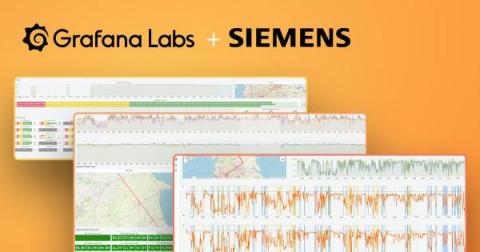
Railway passengers may think of trains simply as a way to get from one place to another, but at Siemens Mobility — a rail transportation company dedicated to delivering sustainable, smart transport — they are that and much more. Siemens Mobility works with more than 3,000 partners, and its customers include Eurostar and Trans Pennine Express. In the U.K., Siemens Mobility maintains about 500 train units and logs 65 million passenger miles per year.
Imagine a universe in which a massively multiplayer online role-playing game (MMORPG) sets Guinness World Records for the size of its online space battles—and that game is built on 20-year-old code. Well, imagine no more. Welcome to the world of EVE Online, where hundreds of thousands of players interact across 7,800+ star systems and participate in more than one million daily market transactions.
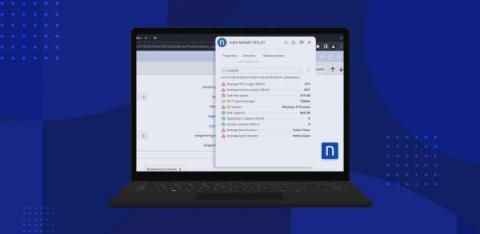
In any hospital, IT tickets raised by doctors and nurses are critical because every IT issue they face takes time and energy away from the delivery of care. The longer it takes to resolve a ticket from clinical staff, the greater the potential negative impact that issue can have on patient experience. Yet even with significant investment in support resources, doctors and nurses may still feel their technology issues are not resolved fast enough.
Growing pains can be a natural consequence of meteoric success. We were reminded of that in our recent panel discussion with SumUp’s observability engineering lead, Blake Irvin, and senior software engineer Matouš Dzivjak. They shared how SumUp’s rapid growth spurt compelled them to change their resolution process—both logistically and culturally—to ensure a service level quality that reflects their customer obsession.
Digital innovations have completely transformed the healthcare industry over the past decade. Today, clinical staff rely on applications to complete nearly every aspect of their day to day duties, from maintaining data privacy compliance to conducting telehealth. That makes it even more important that these critical applications stay online.