Operations | Monitoring | ITSM | DevOps | Cloud

MCP Servers 1.1.0 Add Flexible HTTP Routing and CLI Connection Management

We are pleased to announce the release of MCP Servers 1.1.0, bringing new configuration options for HTTP-based deployments and expanded command-line capabilities for managing database connections. The new version makes it easier to control how MCP Servers are exposed over HTTP, host multiple MCP Servers under a single hostname, and configure connections directly from the command line.

API-first DCIM: Reduce Integration Friction and Keep Control Across Tools

Disconnected tools slow your operations down more than missing data ever could. Every day, teams waste hours stitching together systems that don’t naturally talk to each other. API-first DCIM cuts through that drag, turning scattered signals into one clear operational view. With Hyperview DCIM, you connect faster, keep control, and make decisions without extra manual work.

How we create a Canonical Academy exam

Open source provides the world with access to cutting-edge software, and the learning that comes with it. But how do you validate someone’s skills in an open ecosystem? Canonical Academy is a highly rigorous, job-focused qualification platform designed to empower individuals and enterprises with industry-recognized credentials. The platform addresses a critical gap in tech: validating real-world, hands-on capability rather than rote memorization.

The six pillars of AI-ready telemetry

“AI-ready” is everywhere right now, attached to nearly every product in every category. The catchy label rarely means anything specific, just as additional questions are warranted when vendors claim to be “AI-native”. After fighting through all the marketing jargon, there needs to be a standard, not a slogan. And the definition changes depending on what the data is for. AI-ready for a data warehouse and AI-ready for live operational telemetry are not the same problem.

Latest BGP Hijack Targets Hosting Software Vendor

This post analyzes the technical details of the BGP hijack against Softaculous Ltd, the company behind the Softaculous auto-installer and the Virtualizor VM management platform. The hijack enabled an attacker to fraudulently obtain a TLS certificate and use it to deliver a malicious Virtualizor update to a portion of the company’s customer base.

Cloud Cost Management for Observability: A Practical Guide

Observability spend is outgrowing infrastructure budgets. What drives the cost up, how pricing models work, and a practical framework to manage it. Sejal Pandey works on content and growth at Last9, writing about observability, reliability, and SRE practices.

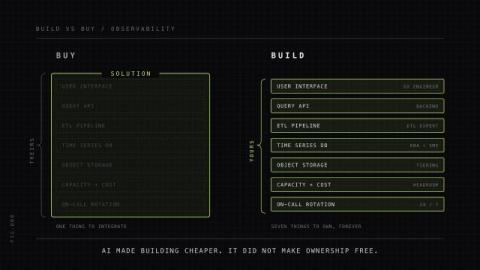
Why you should (not) build your own observability stack

If you are able to build it better than your vendor, then change your vendor. Not build it. Rishi builds large-scale observability systems at Last9, focusing on reliable and cost-efficient telemetry infrastructure, and writes about the practical lessons learned while operating ClickHouse, VictoriaMetrics, and OpenTelemetry in production.

Why compliance keeps slowing your releases (and what to change first)

A team ships at a steady pace for most of the year. Then an audit approaches, and delivery slows. Engineers get pulled off feature work to support the audit, producing the configuration exports, logs, and environment checks that the evidence depends on. The slowdown lasts as long as the audit does. It is tempting to read this as a team that needs to move faster or be bigger. It is usually neither.

LLM token cost: pricing per token explained

LLM token cost is the price a provider charges per token a model reads or writes, quoted in dollars per million tokens. Input and output bill at separate rates, with output priced at roughly 5x input. As of September 2026, published rates range from under $0.10 to more than $180 per million tokens on top-end reasoning tiers. In late 2025, Hardik Sonetta of Thomson Reuters Labs published a warning about the most common prompt caching mistake in production.