Operations | Monitoring | ITSM | DevOps | Cloud

IT's Lifeline - Digital Experience Management for Modern Work

As odd as it might sound, I think these past few months have done a lot of good for IT, and following the recent news from Nexthink last week, I actually feel optimistic for many enterprises out there that might be struggling. Hear me out. Right now, there are millions of people working in new, flexible work environments that didn’t even exist six months ago.

What the Cloud Native Revolution Means for Log Management

This was originally posted on The New Stack. Once upon a time, log management was relatively straightforward. The volume, types, and structures of logs were simple and manageable. However, over the past few years, all of this simplicity has gone out the window. Thanks to the shift toward cloud native technologies—such as loosely coupled services, microservices architectures, and technologies like containers and Kubernetes—the log management strategies of the past no longer suffice.

Anomaly Detection with Median Absolute Deviation

When you want to spot hosts, applications, containers, plant equipment, or sensors that are behaving differently from others, you can use the Median Absolute Deviation (MAD) algorithm to identify when a time series is “deviating from the pack”. In this tutorial, we’ll identify anomalous hosts using mad() — the Flux implementation of MAD — from a Third Party Flux Package called anaisdg/anomalydetection.

Data Will Keep Our Workplaces Healthier and More Productive - But There Must Be Trust and Transparency

In a post-pandemic world, we must use data in new ways. This in turn will require new discussions about, and practices creating, trust and transparency. The necessity of data and its benefits will be weighed against legitimate concerns of misuse of data.

Leverage advanced analytics to secure your endpoint devices

With the new normal adding several more challenges and variables to the security layer, how do you ensure your data is safeguarded without increasing the workload or the headcount of your security team? Using advanced analytics, in tandem with endpoint monitoring applications such as ManageEngine’s Mobile Device Manager Plus and Desktop Central, will help you better visualize and analyze your endpoint data, identify patterns, and establish correlations.

Monitor Apache Ignite with Datadog

Apache Ignite is a computing platform for storing and processing large datasets in memory. Ignite can leverage hardware RAM as both a caching and storage layer to serve as a distributed, in-memory database or data grid. This allows Ignite to ingest and process complex datasets—such as those from real-time machine learning and analytics systems—in parallel and at faster speeds than traditional databases supported by only disk storage.

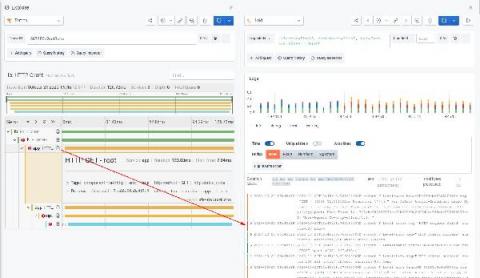
Distributed Tracing Tools and New Industry Standards

Metrics and logs have been around for a long time, yet we haven’t adopted common standards for them. Sure, there have been attempts on the metric side with OpenMetrics. Similarly, tracing only got a standardization effort with OpenTracing just a few years ago. There was no effort in a unified approach to standardize all observability signals until OpenTelemetry began a little less than two years ago. And there has been a need.

Adding preventive revocation alerts to our certificate monitoring

As part of our SSL certificate monitoring, we check a lot of things. The usuals, like if it covers the right domain name or if it hasn't expired are, of course, already included. But SSL certificates can get quite complex. Sometimes, SSL certificates get revoked by the issuer. When that happens, browsers worldwide stop trusting them and will throw an invalid certificate warning.

Becoming Hybrid: Operating Your Cloud Environment

It’s a day for celebration! Our migration is complete, and our applications are now running in the cloud environment best suited to their needs. The rest of our application inventory, the ones not cut out for the cloud, remain on-premises where they belong. Actually…we’re not done yet. We still have some work to do to make sure our hybrid environment runs smoothly and delivers the business value we expect. Fortunately, we aren’t the first ones to travel this path.