How to track expenses for a business: categorize expense types (operating, software, cloud, travel, capital), choose a tracking method (spreadsheet, accounting software, expense management tool, or cost intelligence platform), connect data sources (bank feeds, cloud billing APIs, SaaS invoices), assign ownership per cost center, set a reporting schedule, and audit quarterly.
Over the last year, one theme has consistently emerged in conversations with customers: organizations want to move faster, but not at the cost of the operational stability their business depends on. Whether the discussion is about modernization initiatives, automation programs, AI adoption, or platform upgrades, the underlying challenge is often the same. IT leaders are under pressure to deliver innovation while maintaining stability.
Production failures don't announce themselves cleanly. They arrive at 2 AM, buried inside 40 million log lines, spread across a dozen microservices, and disguised as something that looks entirely unrelated to the actual root cause. For years, engineering teams absorbed this pain through process: runbooks, on-call rotations, dashboards, and a deep institutional knowledge that lived in the heads of their most senior engineers.
The Harness MCP Server now connects directly inside Google Antigravity. Developers can link Harness in under two minutes and give the agent structured, real-time access to their pipelines, execution history, services, environments, and policies, without leaving the editor. What makes it reliable isn't the connection itself. It's the Harness Software Delivery Knowledge Graph underneath, which gives the agent the context to act accurately, fast, and within your guardrails.
AI coding assistants accelerate development but can rapidly introduce vulnerable, malicious, or non-compliant open-source dependencies into your codebase. Harness Artifact Registry's Dependency Firewall acts as a registry-level control point, evaluating and blocking risky external packages before they enter your CI/CD pipeline—essential protection against modern npm-style supply chain attacks.
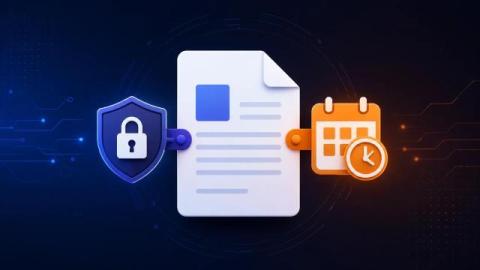
Sensitivity vs retention labels in SharePoint - what each actually does, when to use which, the audit failure modes when admins confuse them, and what survives when content is archived.
There was a time when “Opus” meant a classical composition and “Sonnet” was fourteen lines of Shakespeare you definitely did not read before the test. Now they’re model tiers, and every new release rewrites the economics of your engineering org whether you’re ready or not. Currently, your monthly total hides the crucial information you need to control and justify AI spend.