Operations | Monitoring | ITSM | DevOps | Cloud

The latest News and Information on GitOps and related technologies.

What is GitOps?

This article was written by a guest author. Not long ago, if we wanted to put our code into production, we needed to manually configure a server, our infrastructure, that would host our app or database. This manual process is not only time-consuming, but also prone to errors. That is why at present, developers chose to create “scripts” that are in charge of configuring the infrastructure These “scripts” are known as Infrastructure as Code (IaC).
The Evolving World of GitOps and Observability

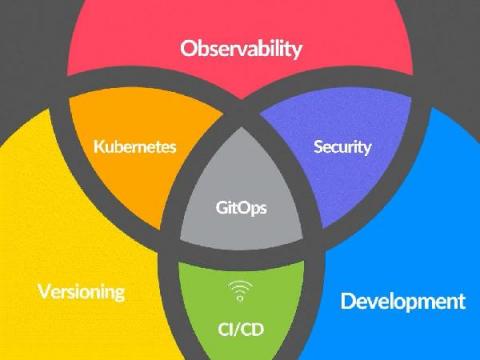
Is GitOps changing observability as we know it? GitOps has been the buzz word in the DevOps space for several years. GitOps, to those that are not familiar, is an operational methodology for DevOps that leverages a continuous deployment approach with Git as the single source of ‘truth’ for declarative control over both infrastructure and applications.

Use InfluxDB with GitHub Actions for GitOps, CI/CD, and Data Transformation

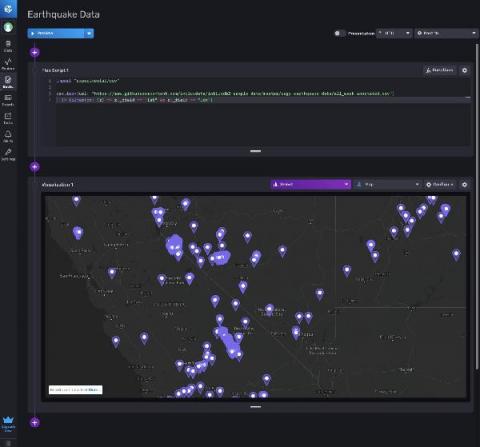
GitHub Actions are a powerful way to add automation to any source code repository. When you take that power and connect it with InfluxDB, you get an amazing combination that allows you to automate data generation, manage GitOps workflows, and a whole lot more. This post will highlight some of the interesting ways to use InfluxDB and GitHub Actions.

Continuous integration with GitOps

Software development is changing rapidly. On one hand, you must quickly adapt to evolving requirements, while on the other, your applications need to operate continuously without downtime. DevOps helps you quickly adapt to changes. Among other initiatives, continuous integration (CI) and continuous delivery (CD) are intgegral to any DevOps practice.

GitOps Use Cases You May Not Have Considered

GitOps is growing in popularity. You’ve probably seen it mentioned on Reddit or dev.to. But what the heck is GitOps? Broadly speaking, GitOps takes the principles of Git and CI-powered workflows favored by software developers — commonly used to automate the process of building, testing and deploying software — and applies them to other business processes.

Building a GitOps Workflow

Since the rise of Kubernetes, GitOps workflows have become the standard way for teams to manage the state of large systems. GitOps is a way to perform application management and delivery, which at its core leverages a version control system to maintain the desired state of the system. Being able to describe the desired state using human readable text files, and allowing automation to handle deployments and updates based on those files, means less opportunity for human error and faster deployments.

Kubernetes GitOps with Rancher Continuous Delivery

As the number of Kubernetes clusters under management increases, application owners and cluster operators need a programmatic way to approach cluster management. Rancher CD solves this by creating a git driven engine for applying cluster changes. Declarative code is stored in a git repo. As changes are committed to the repo, linked clusters are automatically updated. Gitops keeps all your clusters consistent, version controlled, and reduces the administrative burden as you scale.

Kubernetes GitOps with Rancher Continuous Delivery

As the number of Kubernetes clusters under management increases, application owners and cluster operators need a programmatic way to approach cluster management. Rancher CD solves this by creating a git driven engine for applying cluster changes. Declarative code is stored in a git repo. As changes are committed to the repo, linked clusters are automatically updated. Gitops keeps all your clusters consistent, version controlled, and reduces the administrative burden as you scale.

Implementing GitOps on Kubernetes Using K3s, Rancher, Vault and ArgoCD

As Kubernetes continues to establish itself as the industry standard for container orchestration, finding effective ways to use a declarative model for your applications and tools is critical to success. In this blog, we’ll set up a K3s Kubernetes cluster in AWS, then implement secure GitOps using ArgoCD and Vault. Check out the source for the infrastructure and the Kubernetes umbrella application here.