Operations | Monitoring | ITSM | DevOps | Cloud

The latest News and Information on DevOps, CI/CD, Automation and related technologies.

How to standardize app delivery across AWS, Azure, and GCP

Running workloads across AWS, Azure, and GCP is the operational reality for most enterprise engineering teams. The challenge isn't the providers themselves, it's what happens when each one accumulates its own delivery pipeline, its own security configuration, and its own environment management tooling. What starts as provider flexibility quietly becomes provider-specific complexity, multiplied across every team that ships.

Dashboards aren't (quite) dead

Historically, non-technical stakeholders would’ve had most of their data questions answered either through pre-built dashboards or by asking their Data team (or equivalent). Self-serve analytics tools went a step further by offering safe, governed datasets built by Data teams which let non-technical users dig into data without having to worry about how it joins together, how metrics like “revenue” are defined, and so on.

Cloud Asked What It Cost, AI Is Asking What It's Worth | Harness Blog

AI has quickly become one of the largest and fastest-growing enterprise expenses, exposing many of the same governance and visibility challenges organizations previously faced with cloud. Based on findings from the 2026 State of AI in FinOps report, we explore how mature organizations improve AI cost ownership, reduce waste, and build a culture focused on measurable business value.

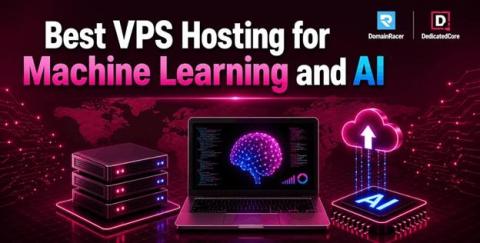
Best 7 GPU VPS Provider for Machine Learning (ML) and AI

There is no reason to buy a GPU. That's unless you train your model or do serious image/video manipulation. A GPU server costs several times more than a CPU VPS for the same month. "Nine out of ten requests for a GPU server for AI actually need a mid-size CPU VPS. They are serving a model, not training one. Match the hardware to the task at hand. Save money. Don't compromise on performance.".

eBPF: Preventing Garbage HTTP Payloads When Reading Kernel Scatter-Gather Buffers

Recently someone on our team opened a traffic snapshot and found an HTTP request that was captured with our eBPF capture agent, nettap. Our protocol dissector parsed most of the response correctly, but that correctness ended once the response headers were processed. What they ended up with was a recording of an HTTP request/response where the response body was just an incorrect collection of garbage binary data when it should have been JSON text.

Top Kubernetes Alternatives in 2026.

Key Takeaways In modern software delivery the pressure to iterate quickly is real. Kubernetes sparked a revolution in container orchestration, and it remains a huge forward step for many teams. But the truth is, adopting Kubernetes is not a guarantee that you'll suddenly move faster or reduce pain. Managing a Kubernetes cluster at scale requires deep expertise, dedicated operations, and often more overhead than many organizations anticipate. This has led many companies to explore Kubernetes alternatives.

DRIVE Deep Dive: Efficiency

This is the fifth and final post in the DRIVE Deep Dive series, following Delivery, Reliability, Initiatives, and Vigilance. For the complete model across all five pillars, download the full DRIVE framework. -- Engineering money and time land in three places a leadership review can actually act on: the cloud bill, the internal spend on AI and LLM tokens, and the split between building new things and keeping old ones running.

How to Connect Cursor to CircleCI: AI-Powered CI/CD Debugging with MCP

Stop context-switching between your IDE and CI dashboard. This video shows you how to connect Cursor to CircleCI using the CircleCI MCP server so your AI agent can read pipeline failures, validate configs, and trigger builds without leaving your editor. In this demo, we introduce a bug, let CI catch it, and watch the agent diagnose and fix it autonomously through a full green pipeline. No manual log hunting required.

Terraform Modules vs. Resources: When to Promote a Pattern

Terraform gives you two ways to express the same infrastructure. You can declare resources directly, or you can wrap them in a module and call that module with inputs. Both produce identical cloud objects. The choice is not about capability, it is about where you want the complexity to live and who you want to be responsible for it. Most teams get this decision wrong in one of two directions.