Operations | Monitoring | ITSM | DevOps | Cloud

The latest News and Information on Continuous Integration and Development, and related technologies.

Native Xet Protocol Support in JFrog Artifactory: How Enterprise Model Management Actually Works

Machine learning models are not like other software artifacts. A single fine-tuned LLM can weigh 70 GB. A model family may share 95% of its weights across dozens of variants. When hundreds of developers, training jobs, and GPU clusters all need the same model at the same time, the infrastructure underneath needs to be built for it.

Introducing Package triggers in Bitbucket Pipelines

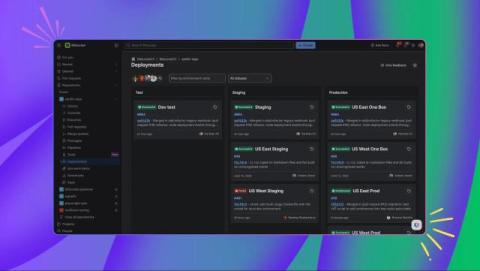
In November 2025, we introduced new triggers and workflows to Bitbucket Pipelines to help teams manage and scale complex CI/CD workflows. We later extended that foundation with additional event-based triggers for pipeline, deployment, and pull request events. We’re now extending that model with a new package-artifact-created trigger.

Trace packages back to their source pipeline

When we introduced native Pipelines authentication for Bitbucket Packages, we made it easier to publish artifacts from CI/CD without relying on personal credentials. Now we’re extending that integration further: package artifacts published through the Pipelines integration can display a Source Pipeline, making it easy to trace an artifact back to the pipeline run that created it.

Bitbucket Packages adds PyPI and NuGet support

If your team bIf your team builds with Python or.NET, your packages have likely lived separately from your code, stored in a registry with distinct login, permissions, and billing. Starting today, they don’t have to. Bitbucket Packages now supports the Python Package Index (PyPI) and NuGet, integrating Python and.NET package management into the platform where your team writes code, reviews pull requests, and runs pipelines.

Why you should use Language Server Protocol (LSP) with Claude Code

Agentic coding tools like Claude Code can write, refactor, and debug across an entire codebase, but by default they read code as plain text, the way grep does. The Language Server Protocol (LSP) changes that: it’s the same code-intelligence layer an IDE uses, and wiring it into an agent lets it read code by meaning instead of by string match. The bigger the codebase, the more a wrong guess about a symbol costs, and the more that structural view pays off.

Cut your environment setup time in half with Chunk sidecar snapshots

When you’re building with AI, you can get a lot done in 30 seconds. Waiting minutes for CI feedback on your latest change can feel like an eternity. Chunk sidecars are designed to give you feedback fast, running your full test suite against the same Linux environment as CI, directly inside the agentic loop. Traditional CI pipelines can take five or ten minutes to catch a basic lint error or failing unit test.

Stop Treating Coding Agent Plugins Like Settings: Introducing Agent Plugins Repositories

Your developers install agent plugins every day: pulling from unmanaged GitHub repos, copying Cursor commands out of Slack, pointing Codex at a personal Git fork. Each of those is a new, uncontrolled distribution channel inside your software development lifecycle, and your platform team has zero visibility into any of it. A plugin is not a preference file. It is executable software, and right now it’s arriving on developer machines with no versioning, no provenance, and no audit trail.