How to write RazorOps pipeline and best practices
In this #razoorps #webinar we have covered general #practiceset of #cicd
#system #jenkins #jenkinsvideos #pipeline #compresión
#visit https://razorops.com for more details.


In this #razoorps #webinar we have covered general #practiceset of #cicd
#system #jenkins #jenkinsvideos #pipeline #compresión
#visit https://razorops.com for more details.
CircleCI is popular among Android developers for several reasons: it’s quick to get started, fast to execute your builds with high parallelism, (whether native, cross- or multi-platform), and even supports running Android emulators right from CircleCI with our Android machine images. This article will show you how to build and test Android applications for an example project on the CircleCI platform.
Developers are building features at an unprecedented speed using what they need from the software ecosystem. These ever-expanding options include open-source libraries and packages, SaaS tools, deployment systems, cloud services, and more. To keep things secure, we always need the same thing: a secret.
In this tutorial, you will learn how to build a custom ASP.NET Core container with Docker and host the container image on Azure Container Registry, a platform owned by Microsoft that allows you to build, store, and manage container images in a private registry. At the end of this tutorial, you will be able to apply the knowledge gained here to link your container image on the Microsoft Azure registry with a web app service and launch your application.
In just a decade, smartphones have become ubiquitous. They facilitate communication via texting and calling, provide entertainment, enable administration, and offer utilities for their users in the form of applications. Users access these mobile applications through their app store, whether it is Apple’s App Store or the Google Play Store. Developers construct them with the smartphone’s operating system in mind. The two mainstream operating systems that are targeted are Android and iOS.
Ciara lists 10 ways to make your software pipelines more transparent and observable to gain insights, identify unusual behavior and possibly prevent a software supply chain attack.
Come explore Ruby as a programming language, Ruby Gems, Ruby on Rails, and hosting your own Ruby Gems repository the easy way with Cloudsmith!
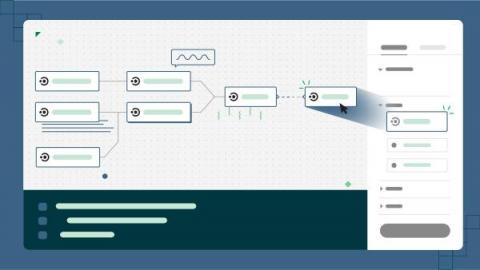
The CircleCI visual config editor (VCE) is now generally available as an open source project. Development teams can now create and modify CircleCI config files in a visual drag-and-drop, low-code environment. The VCE is a node-graph editor that you can use to modify CircleCI config elements and generate config files. It provides a frictionless way to build CI/CD pipelines and interact with CircleCI’s platform in an efficient, user-friendly visual interface.
This is the second tutorial in a two-part series. You can also learn how to automate AWS Lambda function deployments to AWS CDK.
This is one of a two-part series. You can also learn how to automate the deployment of FeathersJS apps to Heroku. In the software development lifecycle, testing offers benefits that reach far beyond the code itself. Testing assures all parties (developers, clients, project managers, etc) that, while the application may not be completely bug-free, it does what is expected, as expected.
Testing is a vital part of the mobile app development process. Your team can use testing to evaluate the quality, security, and reliability of mobile apps before releasing them to your users. Users who expect their applications to be highly performant and intuitive. There are two ways DevOps teams can perform testing for mobile apps: on-premise (also called self-hosted) or in the cloud. But which of these is the best option for your team?
When you build a cloud-based application, you can choose to deploy the resources using the GUI (Graphical User Interface) or CLI (Command Line Interface) provided by the cloud provider. This approach can work well with just a handful of resources, but as the complexity of your application increases, it can become difficult to manage the infrastructure manually.
Your team has worked hard on a software product for months, and it’s finally ready to release to your users! But then the worst-case scenario happens: a wide release soon indicates that the software is plagued with bugs and performance issues, resulting in poor reviews and widespread user dissatisfaction.
When creating an application, developers often rely on many different tools, programs, and people. This collection of agents and actors involved in the software development lifecycle (SDLC) is called the software supply chain. The software supply chain refers to anything that touches or influences applications during development, production, and deployment — including developers, dependencies, network interfaces, and DevOps practices.
Web and browser technology continues to advance, narrowing the gap between the performance of web and native applications. Features that were once exclusive to native applications can be implemented in web applications. This is due in part to the emergence of progressive web applications (PWAs). Web applications can now be installed, receive push notifications, and even work offline.
Organizations are becoming more aware of the advantages of upgrading their continuous integration and continuous delivery (CI/CD) pipelines and moving them to the cloud, from lowering infrastructure costs to eliminating security threats. But carrying out a transfer is challenging, especially when a variety of platforms and technologies are involved.
Continuous Integration and Continuous Delivery (CI/CD) is perhaps best represented by the infinity symbol. It is something that is constantly ongoing, new integrations are rolled out while not interrupting the flow of information that is already running, as to stop systems in order to update them can be costly and inefficient. In order to ensure that you can successfully implement the latest builds into your system, it is important to know how well they will run alongside the components that are already installed and where there may be bottlenecks.
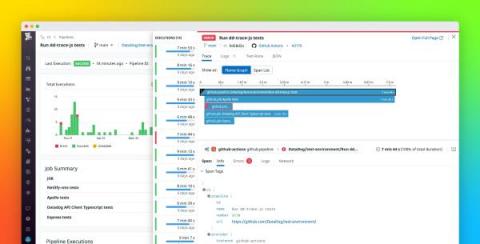
GitHub Actions provides tooling to automate and manage custom CI/CD workflows straight from your repositories, so you can build, test, and deliver application code at high velocity. Using Actions, any webhook can serve as an event trigger, allowing you, for example, to automatically build and test code for each pull request. Datadog CI Visibility now provides end-to-end visibility into your GitHub Actions pipelines, helping you maintain their health and performance.