Operations | Monitoring | ITSM | DevOps | Cloud

Manage your Pipelines usage with the new billing panel

Until recently, the Pipelines Billing Panel has only displayed the total pipeline minutes used across your workspace. You didn’t have visibility into how usage was distributed across your repositories. We’ve now enhanced the billing panel to show you build minute usage by repository for the current and previous billing periods so you can identify and manage high-usage repositories.

Enforce type safety with TypeScript checks before deployments

TypeScript introduces the benefits of static typing to JavaScript, allowing developers to identify bugs at an earlier stage. However, relying solely on developers to run type checks locally isn’t enough. Without tsc being called, a person can just leave the invalid code and it may pass to production. This tutorial will show you how to set up CircleCI to automatically run the TypeScript type checks on each push.

Integrate CircleCI with Railway for automated deployments

The speed and reliability of deploying backend and full-stack applications are usually a concern for development teams. Fortunately, Railway is a developer-friendly platform that allows you to deploy apps with limited configuration. It is also quick, easy to use, and has reasonable defaults. Now, imagine pairing that with CircleCI, one of the strongest continuous integration platforms available.

Introducing JFrog Fly: The World's First Agentic Artifact Repository

AI has created a paradigm shift in software development. AI-native development teams – from small startups to enterprises like Goldman Sachs and Google – are adopting agentic development tools like Cursor and Copilot to increase the speed of code generation to a pace we’ve never seen before. But with all this new code comes a big challenge: how do you manage all these potential new releases and get the right ones deployed?
Sponsored Post

Avantra + Ansible: Better Together for Enterprise SAP Automation

Enterprises trust Ansible for fast, reliable infrastructure automation, including terraform for automated cloud provisioning. Many organizations using Ansible leverage Ansible SAP playbooks for SAP infrastructure automation. Avantra extends the scope of SAP operations using Ansible, adding observability, ITSM and ALM solution integration, and orchestration across the SAP estate. Avantra and Ansible together provide a closed-loop solution where monitoring, automation and proof of outcome live in one place across on-premise, hyperscaler and private cloud ERP implementations.

Validate CDC data in your CI/CD pipeline using CircleCI

Change Data Capture (CDC) is a technique used to identify and capture changes, such as inserts, updates, and deletes, in a source database so they can be replicated to another system in real-time. This approach is crucial in modern data pipelines, especially for powering data lakes, analytics platforms, and event-driven applications that depend on up-to-date information. Setting up a CDC pipeline is only the first step.

The Power of JFrog Artifactory as Your Model Registry

In my previous blog, we demonstrated how the FrogML SDK streamlines the process of integrating custom-built or publicly sourced models from your IDE into JFrog Artifactory. Now that your models are securely stored, versioned, and managed, the natural next question arises: “Ok, so you have some models in JFrog Artifactory, now what?” This is where the real power of the JFrog Platform comes into play.

DevOps & Observability for Digital Catalogs: faster releases, fewer outages

Digital catalogs have become a core sales engine, not just a glossy PDF on a server. They power discovery, merchandising, and conversion across web and mobile experiences. When a catalog powers real revenue, the way you build and run it starts to look a lot like modern software delivery. That's where DevOps and observability enter the picture: practices that shorten release cycles, reduce risk, and keep customer experiences fast and available even on your biggest traffic days.

Fix flaky tests in your sleep with Chunk by CircleCI

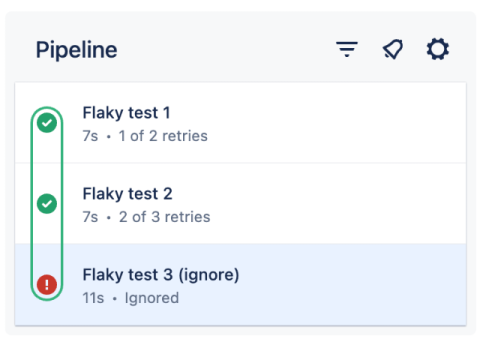
A test fails. You rerun it and it passes. You shrug and move on. This is how most teams deal with flaky tests. The “rerun until green” approach works in the moment, and rerunning from failed tests is a useful way to confirm whether a failure is real. But reruns don’t fix the underlying issue. Over time, they burn CI resources and can hide real instability in your code. On the other hand, fixing flaky tests can mean hours of work.

DORA is right: AI is an amplifier, for better or worse

The 2025 DORA report just surveyed nearly 5,000 technology professionals and delivered a verdict that should reshape how you think about AI investment: AI doesn’t create organizational excellence; it amplifies what already exists. For teams with solid foundations, AI is a force multiplier. For teams with broken processes and dysfunctional systems, AI magnifies the chaos.

Set up a live code editor in Next.js with CircleCI

Interactive playgrounds have changed the way developers learn and experiment with code. Instead of having to copy and paste code into a separate Read–Eval–Print Loop (REPL) or local environment, users can write, edit, and run code directly within the tutorial or application interface. Adding this type of editor to a Next.js app makes it more engaging and helps users understand better by eliminating the need to switch between different tools.

What is autonomous validation? The future of CI/CD in the AI era

Over the past decade, CI/CD has redefined how modern software is built and shipped. CircleCI has been a leader in that transformation, working alongside the world’s best engineering teams to build a reliable foundation for continuous delivery at scale. Today, those foundations are under new pressure as AI reshapes every aspect of the delivery cycle. Developers are producing more change with less certainty about what those changes touch.

Implementing image recognition with React and continuous deployment

Integrating artificial intelligence (AI) into web applications can significantly enhance user experience. AI offers features like image recognition to process and analyze user-uploaded images. Combining this with a robust continuous integration and continuous deployment (CI/CD) pipeline using CircleCI ensures seamless updates and reliable delivery. In this article, you will learn how to build a React app that uses TensorFlow.js for client-side image recognition and set up automated testing with CircleCI.

Building LLM agents to validate LangGraph tool use and structured API responses

Transitioning LLM agents from intriguing prototypes to reliable, production-grade solutions introduces a unique and significant challenge: the inherent stochasticity of LLMs. Unlike conventional software, where inputs predictably yield precise outputs, an LLM’s response can exhibit variability even when presented with identical prompts. To ensure the dependability of your LLM agent, you will need a rigorous validation strategy.

A serverless approach to CI/CD observability with GitLab and Grafana

In today’s fast-paced development environment, it’s critical that you understand what’s happening in your CI/CD pipeline. And yet, many teams struggle with fragmented tooling that makes it difficult to get a holistic view of their dev lifecycle. For example, if you’re using GitLab for CI/CD and Grafana for observability, you’ve probably faced this challenge: how do you bring your GitLab events into your existing observability and alerting infrastructure?

Navigating AI transformation ft. Meg Adams, Senior Director of Engineering at The New York Times

In this episode of The Confident Commit, Rob Zuber sits down with Meg Adams, Senior Director of Engineering at The New York Times, for a deep dive into leading engineering teams through the AI revolution while staying true to organizational mission. Meg shares how the Times approaches AI adoption with a "measured but focused" strategy, emphasizing experimentation and opinion-formation over mandates, and why she believes AI serves as a force multiplier for what already exists in your organization and workflows.

The new AI-driven SDLC

For decades, the software development life cycle (SDLC) has been the framework teams use to understand how software moves from idea to production. It breaks complex work into familiar phases: planning, design, development, testing, deployment, and maintenance. This structure gave organizations a shared way to coordinate teams, track progress, and build with confidence.

Automating Expo app build delivery to QA with CircleCI and EAS webhooks

Manually sharing mobile app builds with Quality Assurance (QA) engineers can be a tedious and error-prone process. Developers often find themselves exporting.apk or.ipa files, uploading them to Google Drive or Dropbox, and then pinging the QA team on Slack to announce the upload, all while juggling deadline and code reviews. This manual process not only slows down feedback cycles but also leaves room for human error, miscommunication, or outdated builds being tested.

Enhancing JFrog Internal Operations with Near Zero Downtime Migration

Data migrations have long been a significant source of anxiety for businesses and IT teams alike. The thought of moving critical databases often conjures images of prolonged downtime, service interruptions, and the ever-present risk of data loss. Indeed, statistics show that “90% of businesses experience unexpected downtime during database migrations, leading to significant revenue loss and customer dissatisfaction”.

Real Estate App Development for Ops & Product Teams: From MVP to Scale

In the competitive world of real estate technology, developing an app that can scale from a Minimum Viable Product (MVP) to a fully-fledged solution is crucial. For operations and product teams, this journey involves strategic planning and execution to ensure the app meets evolving market demands and user expectations.

Testing AI Code in CI/CD Made Simple for Developers

Generative AI can produce code faster than humans, and developers feel more productive with it integrated into their IDEs. That productivity is only real if CI/CD tests are solid and automated. When not appropriately tested, you may encounter a production issue that you haven’t seen before. According to the State of Software Delivery 2025 report, 67% of developers spend more time debugging and resolving security vulnerabilities in code generated by AI.

Building and deploying a Python MCP server with FastMCP and CircleCI

Extending Large Language Models (LLMs) with custom tools has become increasingly valuable in today’s AI landscape. Model Context Protocol (MCP) servers provide a standardized way to connect external tools and resources to LLMs. This can enhance their capabilities beyond basic text generation. While thousands of pre-built MCP servers exist, creating your own allows you to address specific workflows. You can implement use cases that off-the-shelf solutions cannot handle.

Automated RAG pipeline evaluation and benchmarking with RAGAS

Retrieval-Augmented Generation (RAG) pipelines have become an integral part of how Large Language Models (LLMs) access information beyond their training cutoff. These pipelines enable LLMs to deliver current, accurate, and grounded responses. By fetching relevant external documents, RAG mitigates common LLM challenges like factual inaccuracies and hallucinations. However, this methodology introduces a new complexity: evaluating RAG pipeline performance is particularly challenging.

Switching from Jenkins to Bitbucket Pipelines | Bitbucket | Atlassian

This webinar presents the case of a customer who migrated from Bitbucket Data Center and Jenkins to Bitbucket Cloud and Bitbucket Pipelines. The customer migrated approximately 90 repositories and significantly reduced their operating costs. The webinar also briefly introduces the Atlassian migration tool for Jenkins that can convert Jenkinsfiles to bitbucket-pipelines.yml files.

How to Use Synthetic Monitoring in CI/CD Pipelines

CI/CD pipelines are the heartbeat of modern software delivery. They automate builds, run unit tests, package applications, and deploy them to production with a speed that traditional release cycles could never match. For engineering teams under pressure to move fast, pipelines are the mechanism that makes agility possible.

7 ways AI agents are transforming software delivery

For most teams, the slowest part of delivery isn’t writing code, it’s everything that happens after: automated tests, manual reviews, bug fixes, final approvals, and the long wait for deployment. The longer these phases run, the more expensive and painful late fixes become. As AI makes it easier to generate code at scale, those bottlenecks only get bigger.

Code coverage standards for a Next.js project using CircleCI and Coveralls

An essential part of software development, testing helps catch bugs and errors early, improves software quality, and ultimately prevents costly issues from being deployed to production. The effectiveness of software testing will remain uncertain until it can be measured and that is where code coverage comes in. Code coverage is a metric that tells developers what portion of their codebase is executed when specific tests are run.

Why Jenkins might cost you 10x more than Bitbucket Pipelines

Any company still running their own CI/CD, such as Jenkins, is paying a price. The question is which one: Each of these is extremely costly, and yet many software teams still host and run their own CI/CD for two reasons: tools like Jenkins are cheap or free, and hosting Jenkins on an AWS EC2 instance is often cheaper per minute than SaaS CI/CD services like Bitbucket Pipelines. Both reasons are true, but they’re also a trap.