Operations | Monitoring | ITSM | DevOps | Cloud

BigQuery CI/CD and Database DevOps with Harness | Harness Blog

Modern data platforms are evolving rapidly, and Google Cloud BigQuery has become a core part of analytics, AI, and large-scale reporting architectures. Teams (including Harness) rely on BigQuery to process and analyze massive datasets, but managing schema changes in a secure, repeatable way can still be challenging.
Stop pushing broken code to CI: Wire Chunk sidecars into agent hooks

AI agents can write code faster than any developer. But for most teams, the feedback loop hasn’t kept pace. The agent generates code, pushes it to CI, and minutes later a full pipeline run catches a simple linting error or a failing unit test. By then the agent has moved on. Getting back to a working state means rebuilding context from scratch and burning tokens just to fix something that should never have shipped in the first place.

Run your first microbuild in 5 minutes

AI coding agents produce code faster than most teams can validate it. Without a validation step between the agent and CI, every problem gets caught after the push, and feedback arrives long after the agent has lost context. Agents need consistent feedback while they’re working so that small failures get fixed locally and CI stays focused on moving code into production.

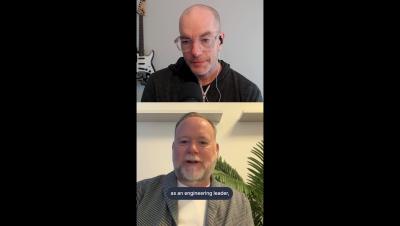
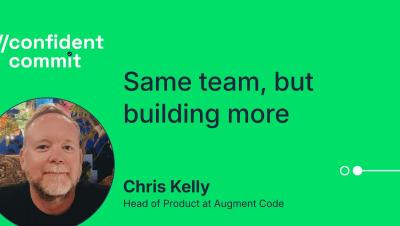
Same team, but building more ft. Chris Kelly of Augment Code

Most teams obsessing over token costs are measuring the wrong thing. The real savings from AI aren't in lines of code written faster. They're in the coordination overhead that disappears when fewer humans need to align before anything gets built. Chris Kelly, Head of Product at Augment Code, joins Rob to cover why prototypes have replaced specs, how agents enable dynamic team capacity the way cloud replaced over-provisioned servers, and what "good code" even means when your primary reader is an LLM. In this episode.

Reduce CI Costs Without Slowing Down Development | Harness Blog

Continuous integration (CI) costs can escalate quickly as engineering teams scale. While most organizations focus on cloud bills, the true cost of CI includes slow build times, developer wait time, inefficient test execution, and overprovisioned infrastructure. CI cost optimization is the practice of reducing the total cost of CI pipelines by improving build efficiency, minimizing compute usage, and eliminating unnecessary work without slowing down development.

Agentic Pipelines now supports Claude Code

Last month, we introduced Agentic Pipelines, a new way to orchestrate AI agents to automatically, and routinely, handle the repetitive engineering chores so you can get back to solving the fun, cool problems. When we launched, Agentic Pipelines supported Atlassian’s developer AI agent, Rovo Dev. Today, we’re opening up Agentic Pipelines to even more teams: You can now run agentic steps in your pipeline with Claude as the provider.

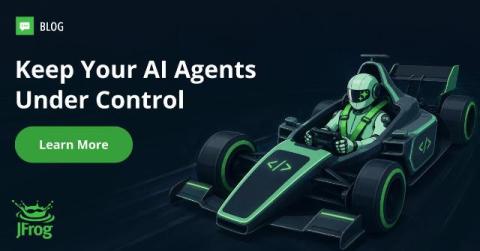
Keep your Agents Under Control with agent-belt

You’re shipping a product with an AI-facing interface, or embedding AI-facing interfaces across your existing product line – skills your customers trigger, MCP servers their agent reaches for. Indie author or enterprise, your code runs in someone else’s agent runtime, against a model that updates every other day and a CLI that updates every other week. Cursor 2026.05.05-84a231c rolls out. Claude Code 2.1.132 lands the same week. OpenAI bumps gpt-5.5.

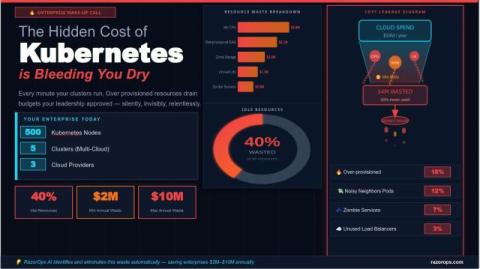
The Hidden Cost of Kubernetes: Why Your Cloud Bill Is 40% Higher Than It Should Be

The average enterprise running Kubernetes wastes between $2 million and $10 million annually — not from overspending, but from under-optimizing. This is the story of costs you can't see on your dashboard but that your CFO feels every quarter.

There's an npm-shaped hole in the AI tooling stack

I've had this same conversation with 60+ engineering teams in the last six months. A team adopts AI tooling. One developer figures out how to use it well, builds up a vault of skills, MCP configs, and slash commands that 10x their output. The rest of the team has whatever they can scavenge from a shared Notion doc.

How Engineering and Ops Teams Use OKRs to Connect Technical Work to Business Outcomes

Engineering and operations teams have a measurement problem that most other functions don't. The technical metrics are excellent. Deployment frequency is up. MTTR is down. Uptime is at 99.97%. The CI/CD pipeline is running cleanly and the on-call burden has been reduced by 30% since the team adopted a proper incident management process. By every internal measure, the team is performing well. And yet, in the quarterly business review, the conversation keeps returning to the same uncomfortable question: what did engineering actually deliver for the business this quarter?

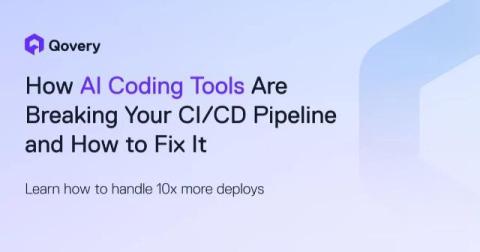
AI DevOps in 2026: How AI Coding Tools Are Breaking Your CI/CD Pipeline (and How to Fix It)

AI coding tools turned every engineer into a 10x developer. Now your CI/CD pipeline is the bottleneck. Learn how to handle 10x more deploys per engineer with Qovery's dual deployment model. Romaric founded Qovery to make Kubernetes accessible to every engineering team. He writes about platform strategy, developer experience, and the future of cloud infrastructure.

Getting started with Codex and CircleCI

Codex is OpenAI’s coding agent, powered by the GPT-5 family of models. It reads your files, proposes edits, and runs commands directly in your local environment. It ships as both a desktop app and an open source CLI, and it extends through plugins that connect it to external tools and services. Like any AI coding tool, Codex is strongest when the code it generates gets validated automatically.
Sponsored Post

The SDLC: phases, popular models, benefits & more

The Software Development Life Cycle (SDLC) describes the process we follow to deliver software to customers. It captures each step of creating software, from ideation to delivery and eventually to maintenance. In this post, we've broken down everything you need to understand the SDLC.

Three Architectural Principles for Mythos & GPT-Cyber Readiness

Since Anthropic announced Project Glasswing and the capabilities of Claude Mythos Preview, and OpenAI announced GPT-Cyber – my calendar has looked the same every day: Back-to-back calls with CISOs, AppSec leads, and security architects. And every call starts with the same question.

How to Improve Your Documentation with AI (CircleCI Chunk Tutorial)

AI coding assistants help you ship features fast, but documentation almost never keeps up. In this Ship Smarter session, we'll show you how CircleCI's Chunk autonomous CI/CD agent automatically analyzes your codebase, identifies documentation gaps, and opens a pull request with improvements. No manual writing required. In this video.

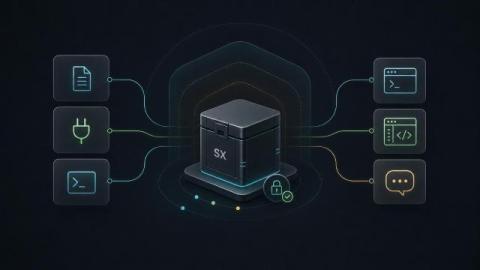
Introducing Chunk sidecars: Inner loop validation that keeps up with your agents

Local development and remote validation were always meant to work together: developers iterate on their machine, run a few manual checks, then push to CI to clear code for production. But AI development broke that balance, flooding CI with a volume of commits no developer has read, let alone tested. Chunk sidecars restore the balance: lightweight, preconfigured environments that run alongside your local workflow and validate changes as they happen.