Operations | Monitoring | ITSM | DevOps | Cloud

The latest News and Information on APIs, Mobile, AI, Machine Learning, IoT, Open Source and more!

Megaport Signs Open Weights and American AI Leadership Letter

Megaport has signed the Open Weights and American AI Leadership letter, supporting open-weight AI, customer choice, and the infrastructure that powers AI innovation. Artificial intelligence is reshaping how organizations build, deploy, and scale digital infrastructure. As AI adoption accelerates, the conversation is evolving beyond model performance alone to the broader ecosystem needed to support long-term innovation.

Software is a team sport. Most AI tools forgot that.

Every AI coding tool ships the same promise: your developers, faster. Autocomplete in the IDE, agents in the terminal, a working prototype before lunch. And it delivers, at least for the person holding the keyboard. The problem is that most of what it takes to ship software was never a solo activity, and that is the part the market keeps skipping.

What is FP&A? Financial planning and analysis in the AI spend era

FP&A stands for financial planning and analysis. It is the corporate finance function responsible for budgeting, forecasting, variance analysis, and decision support. If you're asking what is FP&A in practice: FP&A teams build the annual operating plan, project revenue and expenses, explain gaps between plan and actuals, and give leadership the numbers behind strategic decisions. Accounting reports what happened. FP&A models what happens next.

LLM cost optimization: 7 strategies to cut inference spend

LLM cost optimization is the practice of cutting what you spend on large language models, mostly inference, without losing the quality that makes the AI worth running. The biggest levers are routing requests to cheaper models, caching repeated tokens, batching anything that can wait, trimming prompts, right-sizing models, cutting calls you do not need, and putting one gateway and cost view in front of all of it.

Kepler Is in Public Preview: One Task, Every Repo, Every Agent

A faster car doesn’t get you home faster if the freeway is still jammed. That is the problem most teams run into once they add a second, third, or fourth AI coding agent to the mix. More agents generate more code. They do not automatically generate more finished work, because someone still has to track which agent is waiting on input, which one just opened a pull request, and which one has been quietly stuck for twenty minutes. Kepler is GitKraken’s answer to that traffic jam.

Agent Observability Deep Dive Demo | Grafana Cloud

Grafana AI Observability is our new database and platform for observing AI Agents. Over the past year at Grafana Labs, we built Agents and we needed a way to understand how they are performing, what are the costs associated with them, what's the error rate or time to the first token as well as how they are behaving. Grafana Staff Engineer, Ivana Hučková provides a deep dive demo on how Grafana AI Observability connects our experience building Agents with our experience building observability systems.

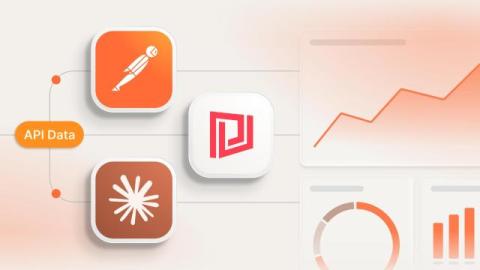
The best ways to visualize API responses in 2026

APIs power almost everything we use today, from cloud platforms and monitoring tools to ticketing systems and internal applications. But no matter how useful an API is, the response usually arrives as raw JSON. That's perfectly fine for machines, but much less convenient for people. Whether you're debugging an endpoint, exploring a new service, or building dashboards for your team, you'll probably want a better way to visualize that data. Fortunately, there are several ways to visualize API responses.

Closing the AI gap: How next-generation knowledge access unlocks mission outcomes for government

A recent IDC Spotlight report based on a survey of 685 public sector respondents found that 72% describe scaling AI from pilot to production as "very" or "somewhat" difficult.¹ Choosing the right model is only part of the challenge. Agencies also need to get their data ready for AI.