Operations | Monitoring | ITSM | DevOps | Cloud

How to fix AI-generated code automatically #aicoding #devops #softwareengineering #techshorts #qa

AI coding agents write code fast, but without real-world context, they create buggy software that turns your users into a QA team. Speedscale’s production context layer captures real traffic and dependencies, giving your AI assistant the power to safely rehearse and test code changes before deploying. Learn more: speedscale.com.
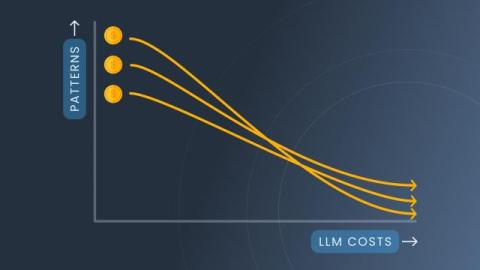
Three LLM Cost Optimization Patterns That Cut Token Spend Without Degrading Quality

Most AI cost conversations start as a surprise. An engineering team builds a new feature with large language models, or they use these LLMs in the features themselves, or they are building AI agents that are talking directly to LLMs. Before you know it, costs climbed faster than expected. You look into making shorter prompts, using cheaper models, and restricting outputs.

What Is OpenTelemetry? A Guide to the OTel Framework

OpenTelemetry (OTel) is an open-source observability framework, hosted by the Cloud Native Computing Foundation (CNCF), that standardizes how your applications generate, collect, and export telemetry data such as traces, metrics, and logs. The instrumentation stays vendor-neutral, so you can instrument a service once, send its telemetry to the observability tool your team uses today, and point it at a different tool next year without touching application code.

ilert now supports a native OpenNMS integration

OpenNMS alarms now reach ilert through a dedicated plugin that runs inside OpenNMS. Network and infrastructure teams get a direct path from an alarm on a device, interface, or service to the phone of the engineer on call. The ilert alert then follows the alarm: accepted when it is acknowledged, resolved when it clears.

With a sandbox workspace of its own, Olly answers bigger questions

Ask Olly to audit your alert coverage and it pulls the whole set through the API, works through it with a script, and hands back the gaps as a report you can send to the team. DataPrime and PromQL already answer the questions that fit a query language, and Olly has been answering those for a long time. The sandbox is for everything else: the sources that have no query language of their own, the correlations that span two languages at once, and the analysis that needs a script rather than a filter.

Hillclimbing Meets Production: What Changes When the Agent Runs Your Infrastructure

On 28 September, Anthropic published a playbook for designing evals and hillclimbing against them, and shipped two commands that put it to work. In Claude Code, /claude-api build-eval interviews you and builds an eval inside your codebase. /claude-api hillclimb then improves your app against it, one change per round, with a held-out split to catch overfitting. It is a good piece of work, and the results are concrete.

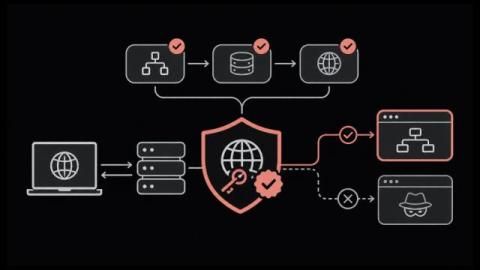
What Is DNSSEC? How DNS Security Extensions Stop Spoofing

Why would a domain with correct records, healthy name servers and a valid certificate stop resolving for part of the internet? Often it's DNSSEC. Your records are fine; the signatures behind them are not, and any resolver that checks signatures now refuses to answer. DNSSEC was designed to stop spoofing and cache poisoning, and it works. The catch is operational.

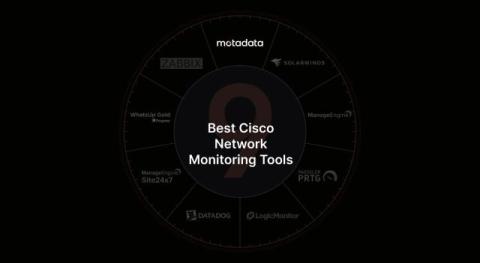
9 Best Cisco Network Monitoring Tools in 2026

Does your IT team have a clear view of your Cisco network's health and performance? Cisco routers, switches, firewalls, and wireless devices need regular monitoring to catch network issues before they affect users. Cisco network monitoring tools help you: However, not every tool supports Cisco technologies such as Meraki, IP SLA, ACI, and SD-WAN. In this guide, we compare 9 Cisco network monitoring tools based on their features, limitations, deployment options, and pricing.