Operations | Monitoring | ITSM | DevOps | Cloud

AI Coding Assistants: Trust Is the Attack Surface

Explore how AI coding agents can be exploited through trusted files, hooks, and MCP tools, and learn how to secure agent workflows against hidden instructions and persistent threats. Why the most dangerous instructions aren't the ones you type into the chat box For the past decade, autocomplete guessed your next line. It was helpful, annoying, or flat-out wrong, depending on the day.

Burnout Is Rising. Here's What You Can Fix

The faster teams deploy, the more releases fail, and burnout climbs right with it. What 700 engineers told Harness about AI-scale delivery. Lenny's Newsletter put out its 2026 tech workforce survey this year, and you should read the whole thing. The headline stats: significant burnout jumped from 44.7% to 55.7% of tech workers in a year. Career optimism dropped from 54.8% to 48.7% over the same period of time.

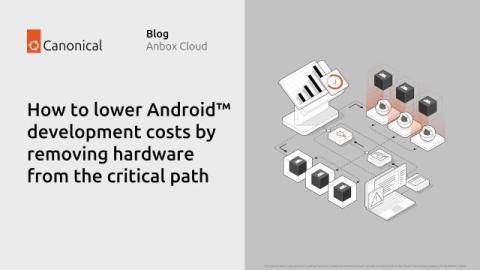
How to lower Android development costs by removing hardware from the critical path

As an Android developer, you’ll almost always have access to a device. However, when handling hardware, the device that you actually need often happens to be already in use, set up incorrectly, stored in another lab, or simply waiting to be reset. That’s when Android development costs start to increase.

When AI Attacks at Machine Speed, Configuration Management Becomes Cybersecurity

The Australian Medicare AI agent incident highlights a broader shift in cybersecurity. AI does not need to create new vulnerabilities to increase risk. Its ability to continuously discover, test, and pursue existing weaknesses places greater emphasis on maintaining secure configurations over time, not just fixing issues once. Security teams are used to the idea that determined attackers will keep looking for a way in.

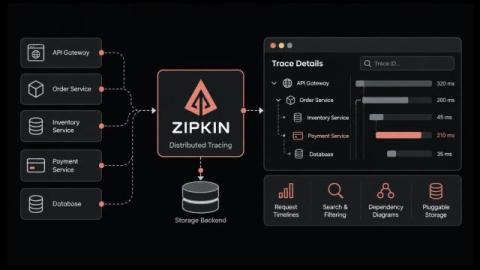
What is Zipkin and How does Distributed Tracing Speed Up Incident Resolution

If a checkout slows down or an API call fails, why can the cause stay hidden for so long while every service dashboard looks fine? One customer click in a microservices setup may hit a gateway and a few backend services first, then a queue or a database. Every hop logs its own events, yet none of those logs points back to the original request. Distributed tracing was created to solve exactly this. Zipkin arrived early, as one of the first open-source tracers.

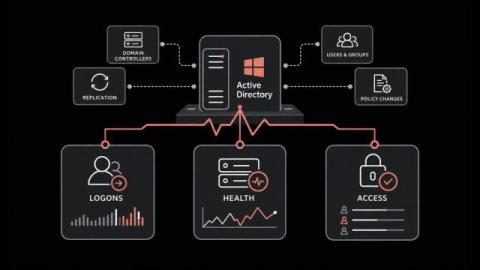
What to Monitor in Active Directory to Keep Logons Fast and Access Under Control

Why do logons crawl at one branch while headquarters is fine, or an admin group gain a member nobody approved, and no alert says a word? Trace any of those back far enough and you usually reach Active Directory. Since email, VPN, file shares and line-of-business software all lean on it for credentials, a directory fault rarely looks like itself and tends to show up as a network outage or a bug in some other application. Most of these faults creep in.

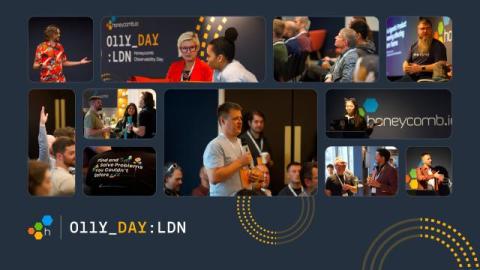
Everything We Talked About at O11yDay London 2026

We just wrapped O11yDay London, and one theme ran through every session: writing code is no longer the hard part. Review queues, attention, operating agents in production, runaway token bills, and proving any of it is worth the money are where teams are getting stuck. The teams making progress are the ones who can see what's happening in production. Here are some highlights. We'll have videos available in the near future.

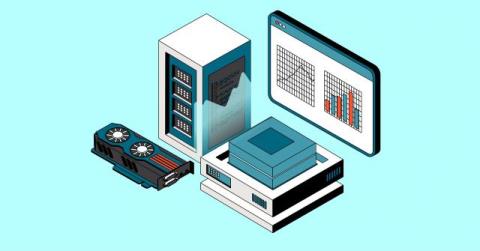
AI infrastructure costs in 2026: what the stack is, what each layer costs, and how much to commit

AI infrastructure costs span four buying tiers in 2026: API-only teams spend hundreds to tens of thousands per month on tokens, GPU renters typically pay $2 to $10 per GPU-hour by chip class, committed-capacity buyers sign six-to-eight-figure reservation contracts, and owners spend millions per rack. The stack has six layers, and most budgets underestimate everything below the GPU line.