Operations | Monitoring | ITSM | DevOps | Cloud

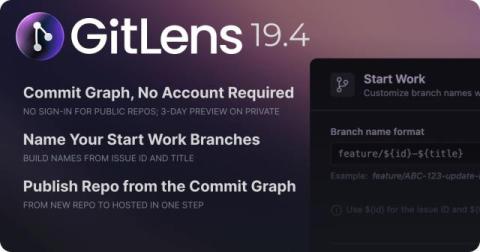
GitLens 19.4: Explore the Commit Graph Without an Account

GitLens 19.4 makes it easier to get into your repository, understand your Git history, and start working without extra setup. The biggest change is simple: the Commit Graph is now available without a GitKraken account for public and local repositories. Open GitLens, open the Graph, and start exploring. No sign-in required. For private repositories, GitLens also gives you a 3-day preview of the Commit Graph without requiring an account, so you can experience the workflow before deciding what comes next.
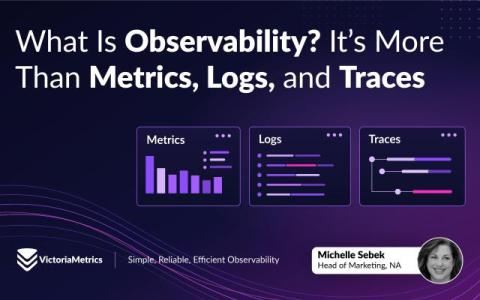
What Is Observability? It's More Than Metrics, Logs, and Traces

Modern systems, due to their distributed nature, rarely fail in simple ways. A request might pass through an API gateway, several microservices, a database, a message queue, and a third-party service before a response ever reaches a user. When something slows down or breaks, knowing that something is wrong is only the beginning. You need to figure out.

Go, Logs and the Engineering Behind VictoriaLogs Performance

What actually makes a logging system fast? That was the question behind Tech Talk. And if you were expecting the answer to be a collection of clever Go optimizations, Jesús Espino, Principal Engineer at VictoriaMetrics, made an important point pretty early in our conversation: A huge part of VictoriaLogs’ performance comes from architecture and data structures. The micro-optimizations come later. Now that gave my Tech Talk partner in crime, Mathias Palmersheim, and me plenty to dig into.

Scout Trails Is in Beta: See What Your AI Coding Agents Are Doing

session start tool call tool call cost outcome AI coding agents have quietly become part of most engineering teams. They open files, run commands, call tools, and push changes, often for hours at a time. Yet when you want to know what an agent actually did, the answer usually lives in one developer’s terminal history, and it disappears when that session closes.

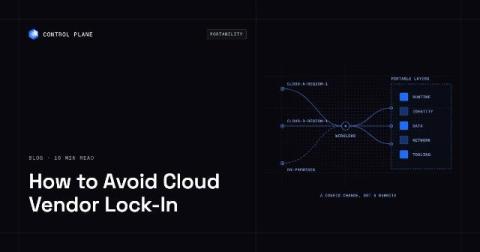
How to Avoid Cloud Vendor Lock-In: A Practical Guide for 2026

You avoid cloud vendor lock-in by keeping the parts that are expensive to move portable: the compute runtime, identity, data, networking, and deployment tooling. You accept proprietary services only where their value clearly exceeds the exit cost, so that leaving or adding a provider is a configuration change rather than a rewrite.

Meet Artist

Every network team keeps a dashboard backlog. A war room needs a view of one incident. A service owner wants path health for a single application. An executive review needs business impact on one page. Each request becomes a ticket for the tooling team, and the view often arrives after the moment that needed it has passed. Artist is the dashboard agent in Selector Foundry, the agentic NetOps platform built on Selector Analytics.

Stacked PRs: what they are and how to run CI on a stack

Large pull requests can be a pain to review. When a change touches dozens of files and adds hundreds of lines of code, reviewers have a lot to work through before they can approve it. And if something needs to change, the whole PR goes through another round of review. Stacked PRs let developers split a large change into smaller, dependent pull requests that can be reviewed separately.

Centralizing logs: Apache Kafka + OpenSearch

TL;DR Aiven for OpenSearch is where you search logs from every service, with OpenSearch Dashboards included and a built-in integration for Aiven service logs. When several destinations need the same logs, or traffic bursts and mapping changes put logs at risk, put Aiven for Apache Kafka in front: applications write once, Kafka buffers and replays, and sink connectors route logs to OpenSearch, object storage and Aiven for ClickHouse.