Operations | Monitoring | ITSM | DevOps | Cloud

The latest News and Information on Observabilty for complex systems and related technologies.

Four Things That Make Coralogix Unique

SaaS Observability is a busy, competitive marketplace. Alas, it is also a very homogeneous industry. Vendors implement the features that have worked well for their competition, and genuine innovation is rare. At Coralogix, we have no shortage of innovation, so here are four features of Coralogix that nobody else in the observability world has.

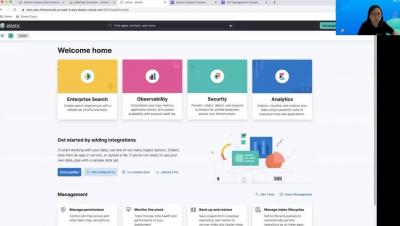
Elastic Observability 8.7: Enhanced observability for synthetic monitoring, serverless functions, and Kubernetes

Elastic Observability 8.7 introduces new capabilities that drive efficiency into the management and use of synthetic monitoring and expand visibility into serverless applications and Kubernetes deployments. These new features allow customers to: Observability 8.7 is available now on Elastic Cloud — the only hosted Elasticsearch offering to include all of the new features in this latest release.

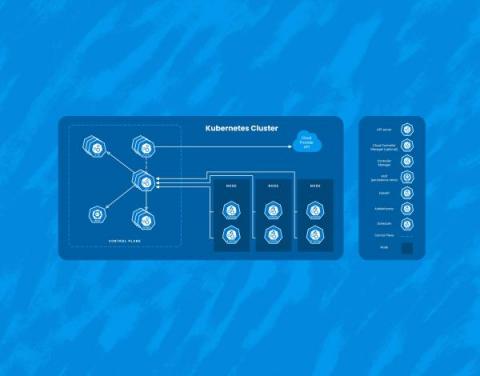
Comprehensive Kubernetes Observability with LogicMonitor's Kube-State-Metrics Integration

With the growing popularity of Kubernetes, the need for effective monitoring solutions has become crucial. LogicMonitor, a leading cloud-based monitoring and observability platform, has rolled out a new set of DataSources in its Kubernetes monitoring solution, LM Container, that uses data from the kube-state-metrics service to provide enhanced visibility into the state of Kubernetes objects.

Splunk Synthetics in Observability Terraform Provider Released

“How do you know your web properties and APIs are up and functioning as expected for users, not just nationally, but across the entire planet?“ Splunk Synthetic Monitoring provides an effective solution to monitor and track the reliability of web properties from locations all over the globe. By generating simulated user or API requests with Splunk Synthetics you’ll quickly be able to measure response times from various locations, devices, and connection types.

Twelve-Factor Apps and Modern Observability

The Twelve-Factor App methodology is a go-to guide for people building microservices. In its time, it presented a step change in how we think about building applications that were built to scale, and be agnostic of their hosting. As applications and hosting have evolved, some of these factors also need to. Specifically, factor 11: Logs (which I’d also argue should be a lot higher up in the ordering).

Elastic Observability: Built for open technologies like Kubernetes, OpenTelemetry, Prometheus, Istio, and more

As an operations engineer (SRE, IT Operations, DevOps), managing technology and data sprawl is an ongoing challenge. Cloud Native Computing Foundation (CNCF) projects are helping minimize sprawl and standardize technology and data, from Kubernetes, OpenTelemetry, Prometheus, Istio, and more. Kubernetes and OpenTelemetry are becoming the de facto standard for deploying and monitoring a cloud native application.

Trace at Your Own Pace: Three Easy Ways to Get Started with Distributed Tracing

Stepping through a trace is an invaluable debugging workflow, providing a way to follow requests from service to service even as the applications we manage become more complex and distributed. That same complexity can make getting started with distributed tracing feel overwhelming, but it’s important to remember that instrumenting your code is an additive process—you don’t need to boil the ocean. A trace through a thousand services starts with a single ID.

Learn How NS1 Uses Distributed Tracing to Release Code More Quickly and Reliably

Chris Bertinato, Software Architect at NS1, and Nate Daly, Head of Architecture at NS1 along with Jessica Kerr, Honeycomb Developer Advocate, and Account Executive Scott Phillips discuss how NS1 used distributed tracing to scale their organization and accelerate their migration from a monolith to microservices.

Discover Unknown Service Interaction Patterns With Istio & Honeycomb

Istio service meshes enable organizations to secure, connect, and monitor microservices to modernize their enterprise apps more swiftly and securely. With the addition of distributed tracing and powerful observability tooling, platform operators can gain immediate actionable insights about their applications.