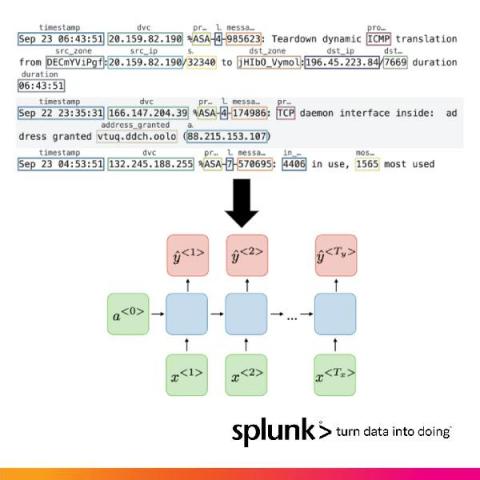
The financial services (FS) industry is going through a period of change and disruption. Technology innovation has provided the means for financial institutions to reimagine the way in which they operate and interact with their customers, employees and the wider ecosystem. One significant area of development is the utilisation of artificial intelligence (AI) and machine learning (ML) which has the potential to positively transform the FS sector.
Coca-Cola is one of the most recognizable brands on the planet. That’s because wherever it’s produced, the quality, product, and design are the same. When three Coca-Cola companies merged in 2016 to create Coca-Cola European Partners, operational differences became apparent. The company needed a way to standardize platforms and processes across 13 Western European countries and 50 bottling plants. We had three systems in place, three ways of working, and multiple languages.
A common challenge in data engineering is to combine traditional data warehousing and BI reporting with experiment-driven machine learning projects. Many data scientists tend to work more with Python and ML frameworks rather than SQL. Therefore, their data needs are often different from those of data analysts. In this article, we’ll explore why having a data lake often provides tremendous help for data science use cases.
Large amounts of data no longer reside within siloed applications. A global workforce, combined with the growing need for data, is driving an increasingly distributed and complex attack surface that needs to be protected. Sophisticated cyberattacks can easily hide inside this data-centric world, making traditional perimeter-only security models obsolete.
Does your Elastic Enterprise Search Cloud deployment follow a predictable usage pattern? You can automatically scale up and down your deployment on a schedule to achieve optimal performance and reduce operating costs. In this article we show you how to use the Elastic Cloud API to change how many Enterprise Search nodes you’re running. We call these APIs from a cron job to achieve hands-free, time-triggered autoscaling.
In SecOps, knowing which host processes are normally executed and which are rarely seen helps cut through the noise to quickly locate potential problems or security threats. By focusing attention on rare anomalies, security teams can be more efficient when trying to detect or hunt for potential threats. Finding a process that doesn’t often run on a server can sometimes indicate innocuous activity or could be an indication of something more alarming.
When you want to stay ahead and on top of things in a fast-moving industry, machine learning (ML) is surely one of the trending solutions. Today, innovative companies already have leading Machine Learning tools well-integrated into their processes. In comparison, your start could seem dreadfully slow. Or maybe you just don’t have the time or resources to invest in running your own Machine Learning training infrastructure.
Cloud API logs are a significant blind spot for many organizations and often factor into large-scale, publicly announced data breaches. They pose several challenges to security teams: For all of these reasons, cloud API logs are resistant to conventional threat detection and hunting techniques.