Getting Started with sbt and Cloudsmith
Dan walks through sbt support for publishing a package to Cloudsmith and integrating your private repo into a project to help you manage your dependencies. #cloudsmith #sbt


The latest News and Information on DevOps, CI/CD, Automation and related technologies.
A major goal of DevOps is task and process automation. While total automation is possible to a large extent, DevOps engineers can’t just run a process and then leave it. They need to quickly react in the event of downtime and incidents. Usually, it’s important to react as fast as possible because downtime for even a few minutes can cost from $2,300 to $9,000 according to the Ponemon Institute in 2016 and a 14-hour outrage cost Facebook an estimated $90 million in March 2019.
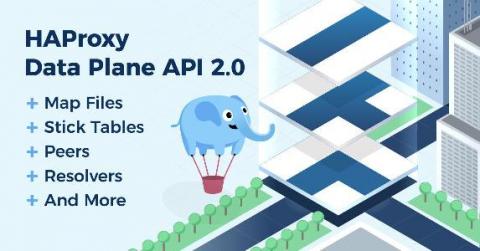
Version 2.0 of the HAProxy Data Plane API brings some exciting enhancements that unlock the power of HAProxy’s flexible configuration and its runtime capabilities. The HAProxy Data Plane API, which lets you manage your HAProxy configuration dynamically using HTTP RESTful commands, has marked a major milestone with the release of version 2.0. This release emphasizes the runtime aspects of HAProxy, giving you the ability to manage map files, stick tables, peers, DNS resolvers and more.
Nowadays, Slack is often the default choice for an online communication tool in the tech industry. Startups, enterprises, open-source projects - they all use Slack to communicate within their organization but sometimes also with their users and community. Our startup was no different. In this article, I explain what made us look for Slack alternative and what are our impressions after a month of switching to Discord, so you can learn from those before you make your decision.
This article will describe the process of installing Rancher 2.4 on a highly available K3s Kubernetes cluster in Microsoft Azure. It will also take advantage of Microsoft Azure Database for MySQL, which removes the dependency on etcd and provides us all the additional features that Azure delivers with this service. You will learn how to deploy the infrastructure to support this pattern using only the Azure Cloud Shell.
Since launching in 2014, AWS Lambda has dramatically grown in popularity. Lambda allows you to run code 7without having to manage the underlying compute resources. From a monitoring standpoint, you no longer have the need or ability to observe traditional performance metrics like CPU and memory. That doesn't mean you don't need to keep an eye on other things, though. So what metrics should you monitor for your Lambda functions?