Operations | Monitoring | ITSM | DevOps | Cloud

The latest News and Information on DevOps, CI/CD, Automation and related technologies.

The 5 Types of Service Desk Automation Platforms and What Each One Actually Does

Shopping for a service desk automation platform feels like it should be straightforward. It isn't, and the reason is that the language vendors use masks how differently these platforms actually behave once they're live. Every platform claims that they automate more, resolve faster, and reduce ticket volume. That’s a given.

What is Sovereign Cloud? What Engineers and IT Leaders Need to Know

A sovereign cloud is a cloud environment that keeps data, infrastructure, and access under the control of a specific country or region. It lets organizations meet strict data residency and privacy laws without giving up cloud speed, automation, or modern DevOps practices. As regulations tighten and AI adoption grows, sovereign cloud is becoming the go‑to model for governments, regulated industries, and global enterprises that need both compliance and agility.

Your Cloud Economics Pulse For April 2026

Welcome to April’s Cloud Economics Pulse, CloudZero’s monthly look at cloud spend as AI moves from cost problem to strategic commitment. March’s Pulse called 4.01% a record. It lasted all of 31 days. Why? February’s billing data came in at 4.84% aggregate AI/ML share. That’s another high, another acceleration. You’ve heard it before and it’s getting a bit boring now, but the story isn’t in the numbers; it’s now in the behavior.

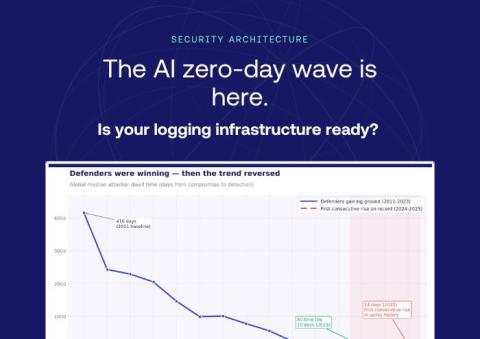
The AI Zero-Day Wave Is Here. Is Your Logging Infrastructure Ready?

Last week, the cybersecurity industry received a signal it cannot afford to ignore. Anthropic announced Claude Mythos Preview: a general-purpose frontier AI model that, without any explicit training for the task, autonomously discovered and fully exploited zero-day vulnerabilities across every major operating system and web browser. Not theoretical capabilities.

The leadership transitions nobody warns you about

Most engineering career advice treats the leadership track as a ladder where each step is a slightly bigger version of the one before it. That metaphor is the reason so many career transitions go sideways. IC, manager, director, and VP are four different jobs. Each has its own failure modes, its own definition of what counts as your work, and its own relationship to the code. The skills that earn a promotion to one level are rarely the skills that make someone effective at the next.

Building Governance, Auditability, and Visibility into Database DevOps | Harness Blog

Database changes are inherently complex: coordinating schema updates, managing risk, and avoiding downtime all require care. Even when teams improve how they deliver those changes, governance often remains inconsistent, manual, and reactive. In many environments, governance is treated as a separate layer around deployment. Policies are applied unevenly, approvals become bottlenecks, and audit evidence is assembled after the fact, creating gaps in enforcement and increasing operational risk.

Your AI Agents Are Only As Good As Your Data | Harness Blog

Every agent demo follows the same arc. The agent calls an API. A deployment triggers. A ticket gets created. The audience is impressed. Then someone asks a real question: "Which regions had the highest order failure rate this quarter, and are any of them linked to vendor SLA breaches?" That question crosses four entity types — orders, fulfillment records, vendors, SLA contracts.

Why Rollbacks Matter in Infrastructure Automation | ENV Zero Topic Talk

Welcome to another ENV Zero Topic Talk! Today, we dive into why rollbacks are crucial in infrastructure automation. Discover how ENV Zero’s rollback feature ensures your systems remain stable by enabling you to quickly revert to a known good state during deployment failures. Minimize downtime, protect your services, and improve recovery times. Learn how rollbacks can improve your deployment process and safeguard your business today.

The hidden cost of scaling ecommerce on hyperscalers

Key takeaway: Hyperscaler pricing models often penalize e-commerce growth due to unpredictable egress fees and unbounded auto-scaling, but moving to a resource-based allocation model allows teams to treat infrastructure costs as a deliberate business decision rather than a post-campaign surprise. Ecommerce traffic doesn't grow linearly. It spikes, and every spike rewrites your cloud bill.