[Webinar] Solving for multi-cloud visibility in minutes
Watch the webinar see how easy it can be to see across your cloud estate in minutes.


The latest News and Information on Cloud monitoring, security and related technologies.
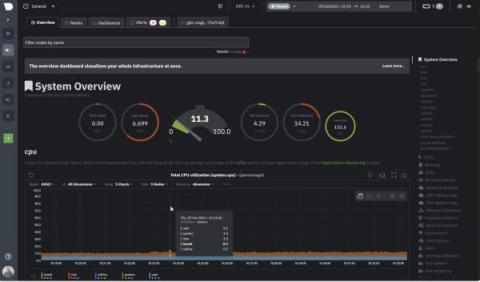
Netdata excels in collecting, storing, and organizing metrics in out-of-the-box dashboards for powerful troubleshooting. We are now doubling down on this by transforming data into even more effective visualizations, helping you make the most sense out of all your metrics for increased observability. The new Netdata Charts provide a ton of useful information and we invite you to further explore our new charts from a design and development perspective.
This is a short blog post about a pattern that we’ve observed more frequently among some of the large enterprises: the use of AWS S3 as both an observability lake and a data bus. AWS S3’s simple API, ubiquitous language support, unmatched reliability and durability, retention options, and numerous pricing plans have made it the de facto standard for storing massive amounts of data.
In this post, we’ll walk through our journey of launching Cribl LogStream Cloud on AWS Graviton instances. In order to put our journey into perspective, it is worth spending a few moments to describe the product and its resource requirements.
Across the globe, in-person technology events are beginning to emerge from their pandemic hibernation. For developers and DevOps teams, no event has been more anticipated than AWS re:Invent, which is back in Las Vegas, November 29th — December 3rd to help bring us all back together and slowly let us find our new normal. While handshakes may be replaced by elbow bumps or other newfound greeting rituals, we are excited to be back and see all of you in real life.
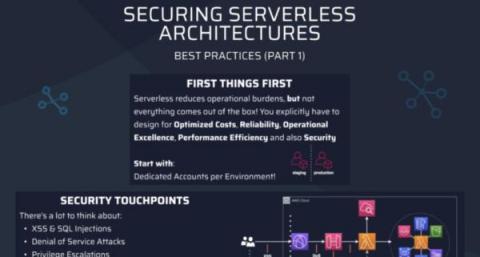
Serverless reduces a lot of operational burdens, but a ������������ ������������������������ is still your responsibility 🔐 From web threats, over IAM principles to auditing and monitoring.
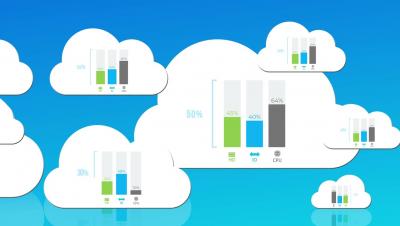
In an on-premises environment, you have to pay for the capacity you have regardless of whether you’re using it, and you can’t exceed that capacity without purchasing and provisioning new hardware. In the cloud, however, you have much more flexibility thanks to cloud elasticity, which is the ability to automatically provision or deprovision resources based on workload changes.
This tutorial shows you how to set up a Ubuntu Desktop on Google Cloud. If you need a graphic interface to your virtual desktop on the cloud, this tutorial will teach you how to set up a desktop environment just like what you can get on your own computer. We need four steps to set up a machine.