Operations | Monitoring | ITSM | DevOps | Cloud

The latest News and Information on Cloud monitoring, security and related technologies.

Why Unit Economics Are The Key To Unlocking Forecasting

In SaaS companies, engineers are the biggest influencers to cloud costs. They choose the infrastructure, build the products, and produce the code. Unfortunately, having this power means engineering managers are often asked to predict cloud spend months or even years into the future. An executive or a head of finance might approach the engineering head and ask how much the company will spend on cloud costs next year, thinking he or she should naturally have the answer.
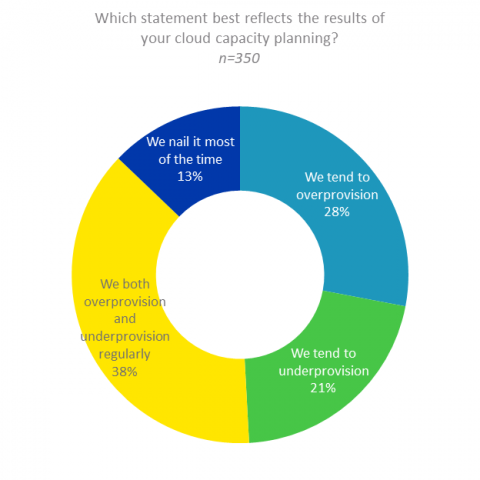
Cloud Capacity Planning Is a Hit-or-Miss Exercise That Mostly Misses

The goal of capacity planning is to match resources with demand. There are essentially three outcomes from this analysis. You can underestimate the resources you need (underprovision), which can hurt performance. You can overestimate (overprovision), which adds unnecessary costs. Or you can get it just right (rightsized). And, of course, you want to be rightsized at the lowest possible cost. Because many factors go into cloud capacity planning, it can feel like more of an art than a science.

Five worthy reads: Multi-cloud strategy in the digital era

Five worthy reads is a regular column on five noteworthy items we have discovered while researching trending and timeless topics. This week we are exploring the multi-cloud strategy and why its the next biggest thing in cloud computing. In an age where digital innovations happen at breakneck speed, the cloud has become crucial to every enterprise.

Whisper Data Migration to the Cloud

In the modern business landscape, the recent surge in cloud computing has become a game-changer, fundamentally altering how organizations manage their IT infrastructure. As businesses increasingly embrace digital transformation, migrating services and applications to the cloud has emerged as a crucial factor in guaranteeing scalability, flexibility, and cost efficiency.

Hyper-V vs VMware: A Comprehensive Comparison

Virtualization has become an essential aspect of modern computing. By creating a virtual version of a computing resource, such as hardware, storage, or an entire operating system, virtualization allows businesses to optimize resource utilization, streamline management, and reduce costs. Two of the most popular virtualization platforms in the market are Microsoft’s Hyper-V and VMware’s vSphere.

Upsun as a SaaS development and management platform

The Software as a Service (SaaS) model operates by treating each customer as a tenant of the application. To use the SaaS application, each tenant is usually required to pay a subscription. There are three main tenancy models for a SaaS application: In this article we'll focus on specific challenges brought about by the single-tenant model, including developing, deploying, and keeping up-to-date several instances of the SaaS application.

Upgrade your existing Ubuntu LTS instances to Ubuntu Pro in AWS

In April 2023, Amazon Web Services (AWS) released a new functionality that allows users running Ubuntu LTS to upgrade their instances to Ubuntu Pro with just a few clicks. This upgrade provides additional security features, including patching for universe packages, extended security management for an additional five years, live kernel patching, and access to FedRamp and FIPS modules.

Static credential management for platform engineers

Cloud CI/CD is a force multiplier for development teams, especially those working remotely. Automated CI/CD takes load off of developers, allowing them to focus on building better products. Hosted CI/CD adds further benefit to this, ensuring that this newfound capacity isn’t spent managing the testing and deployment infrastructure, and that remote team members have easy access to CI/CD tools.