Operations | Monitoring | ITSM | DevOps | Cloud

The latest News and Information on Containers, Kubernetes, Docker and related technologies.

How to Create an Azure Monitor Alert

Azure Monitor gathers performance metrics from your various Azure resources and allows you to explore those metrics through visualizations. It also allows you to manually create alerts that will notify you when a metric crosses a predefined threshold. In this blog post, we’ll cover how to create an alert in Azure Monitor.

Understanding common library implementation

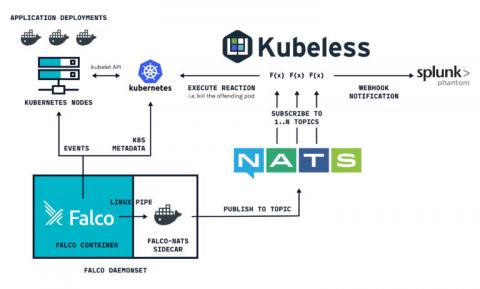
As Falco grows in popularity, many new users get exposed to it on a daily basis. As should be expected, most of these users are not aware of what the architecture underneath Falco is. What components play a role in powering it? How do these components relate to each other? I thought it would be fun to write a blog post that answers these questions. And I thought it would be fun to write it with an historical perspective.

Persistent Storage with Portworx on Kubernetes

To remain competitive in today's fast-paced, digital world, your business needs to adopt technologies that enable you to innovate and scale. Kubernetes is quickly becoming the choice solution for teams looking to deliver modern cloud native applications while decreasing cost and optimizing resources. However, learning and managing Kubernetes while navigating the Cloud Native Computing Foundation (CNCF) landscape of tools can be a significant challenge.

Monitor your Fargate container logs with FireLens and Datadog

To centralize logging from your entire stack—from traditional infrastructure to serverless components—Datadog is announcing native support for the launch of FireLens for Amazon ECS. FireLens streamlines logging by enabling you to configure a log collection and forwarding tool such as Fluent Bit directly in your Fargate tasks. We’ve partnered with AWS to provide built-in Fluent Bit support for Datadog so that you can now seamlessly route container logs from AWS Fargate.

Upgrading Kubernetes Without Upgrading Rancher

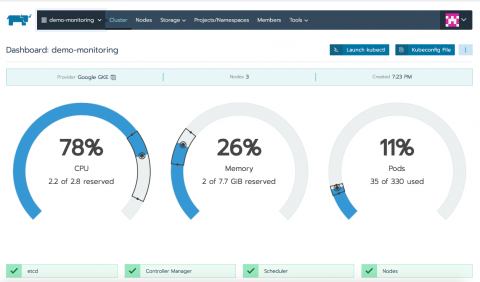
Prior to version 2.3, new versions of Kubernetes came out with point releases of Rancher and required an upgrade to Rancher before they were made available for use. Rancher 2.3 changes that pattern and now makes it possible to update the metadata store for available Kubernetes versions, disconnecting the Rancher server upgrade process from the Kubernetes cluster upgrade process.

Tim Pouyer - Promoting Kubernetes CI/CD to the Next Level

Many companies and organizations have adopted CI/CD processes in order to help deliver applications running on Kubernetes quickly, transparently, and with automated tests. While this is a desirable goal, it gets more complex when developing a management layer on top of k8s, especially when both images and Helm charts are involved.

From Zero to DevOps Superhero: The Container Edition - Jessica Deen, Microsoft

Microservices can be hard; understanding container best practices can be hard as those practices are still being discovered. This session aids in minimizing the learning curve with container orchestration, specifically Kubernetes, by bringing DevOps best practices into the mix. This is not another HelloWorld session with quick tips. Instead, you can expect a deep dive into how you can truly go from zero to DevOps superhero by simply selecting container tooling specifically built for simplifying the process.

Tigera Joins the Fortinet Fabric-Ready Program and Partners with Fortinet to Secure Kubernetes Environments

We are proud to partner with Fortinet and join their Fabric-Ready Technology Alliance Partner program. With this partnership, Fortinet customers will be able to extend their network security architecture to their Kubernetes environments. Our partnership was driven from interest from Fortinet’s customers to protect their Kubernetes based infrastructure. Kubernetes adoption is growing like wildfire and nearly every enterprise on the planet is at some stage of their Kubernetes journey.

Run your tests in parallel with Codefresh and Knapsack Pro

One of the most well-known problems when it comes to testing applications is the amount of time required by all test suites. Integration tests, in particular, are usually very slow to execute and depending on the type of application, several minutes (or even hours in extreme cases) are needed in order to get the final execution result. You can reduce the test execution time with several techniques, but one of the most effective methods is running your tests in parallel.

Kubernetes Adoption Hastens in EMEA

Containers - and Kubernetes - are now a key part of enterprise growth strategy across EMEA. We can see this not only as usage of Rancher grows, but also as the popularity of our local Lighthouse Events increases. In Northern EMEA particularly, the appetite for Kubernetes is accelerating rapidly. How are companies in this region capitalising on Kubernetes?