The latest News and Information on Containers, Kubernetes, Docker and related technologies.
Running a Kubernetes cluster isn’t easy. With all the benefits come complexities and unknowns. In order to truly understand your Kubernetes cluster and all the resources running inside, you need access to the treasure trove of telemetry that Kubernetes provides. With the right tools, you can get access to all the events, logs, and metrics of all the nodes, pods, containers, etc. running in your cluster. So which tool should you choose?
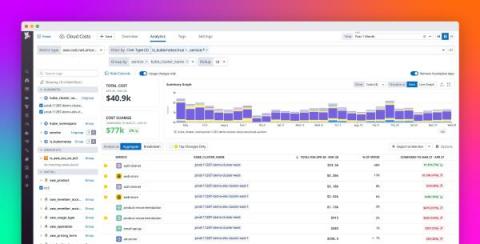
Rising container usage has fueled a growing reliance on container orchestration systems such as Kubernetes, EKS, and ECS. As organizations increasingly opt to run these systems in the cloud, their cloud spend tends not only to grow but also to become more opaque due to the dynamic complexity of these environments. Typically, various services, teams, and products share cluster resources, and as nodes are added and removed, those resources continuously shift.
Kubernetes has created a major impact on modern software development because it is a powerful open source container orchestration platform that enables organizations to deploy and manage complex containerized applications at scale. In this blog, we will cover how Rancher Desktop can help developers run and manage Kubernetes locally.
Today, the cloud platform engineers are facing new challenges when running cloud native applications. Those applications are designed, deployed, maintained and monitored unlike traditional monolithic applications they are used to working with. Cloud native applications are designed and built to exploit the scale, elasticity, resiliency, and flexibility the cloud provides. They are a group of micro-services that are run in containers within a Kubernetes cluster and they all talk to each other.
In the complex world of Kubernetes, logs serve as the backbone of effective monitoring, debugging, and issue diagnosis. They provide indispensable insights into the behavior and performance of individual components within a Kubernetes cluster, such as containers, nodes, and services.
This Kubernetes Architecture series covers the main components used in Kubernetes and provides an introduction to Kubernetes architecture. After reading these blogs, you’ll have a much deeper understanding of the main reasons for choosing Kubernetes as well as the main components that are involved when you start running applications on Kubernetes. This blog series covers the following topics.